
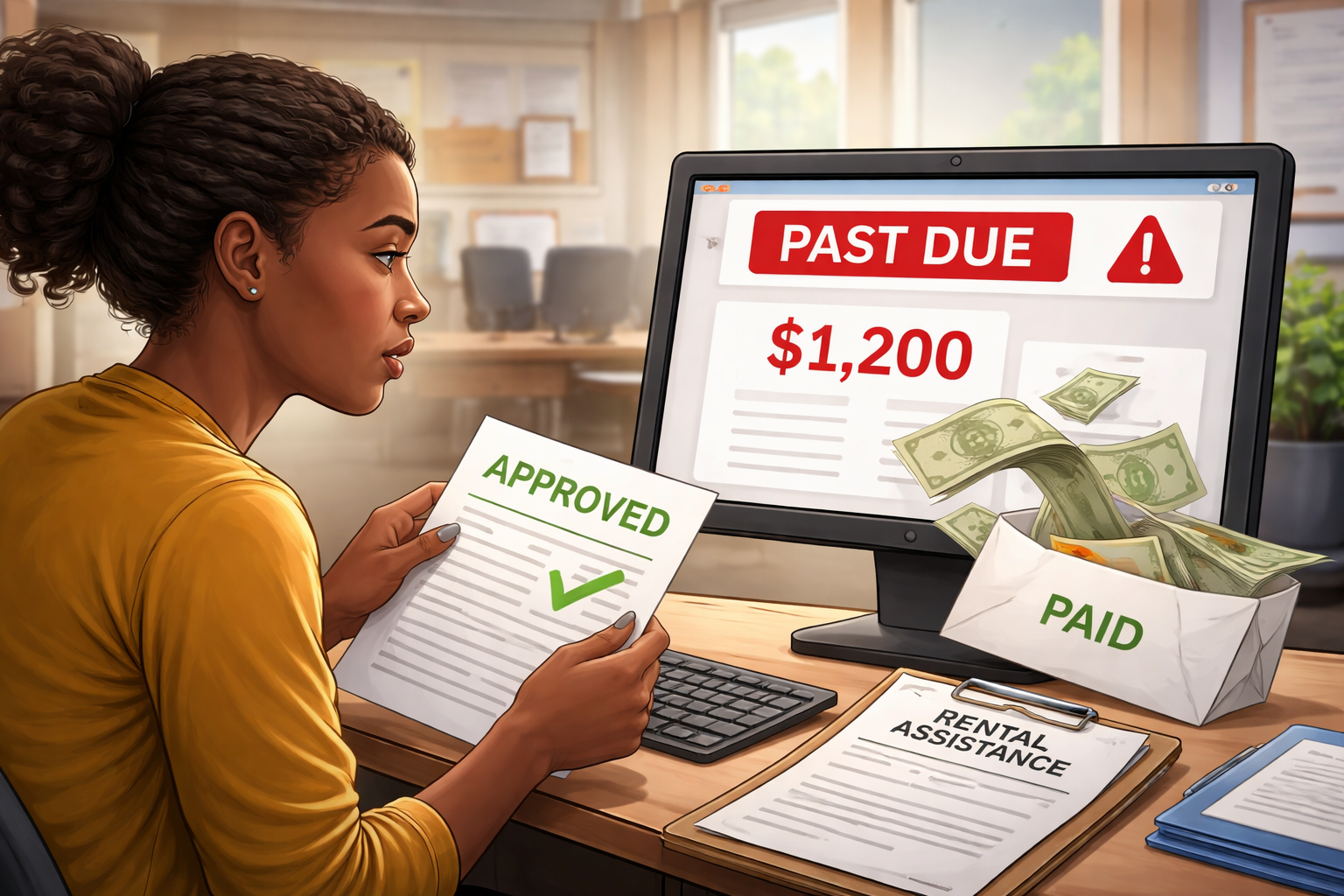
Rental Assistance Paid but Rent Still Shows Unpaid was the exact problem the moment the account screen did not change. The assistance program had already confirmed the money was approved and sent. The landlord’s office was still saying the balance remained open. At that point, the issue no longer felt like a delay. It felt like the beginning of a bigger problem that could quickly turn into late fees, a notice on the door, or a rent ledger that kept getting worse even though the payment had already been made.
That is what makes this type of rent dispute different from an ordinary payment delay. The money may already exist. The approval may already be complete. But the account can still look unpaid because the landlord system has not applied the funds the right way, has not matched the payment to the correct tenant ledger, or has treated assistance money as something separate from current rent. When Rental Assistance Paid but Rent Still Shows Unpaid happens, the real danger is not only the missing credit on the screen. The danger is everything the landlord system may do next while the ledger still shows a balance.
If you want the broadest overview first, this hub explains how rent posting problems can grow from a simple delay into a much larger account dispute across landlord systems.
Why this happens
Rental Assistance Paid but Rent Still Shows Unpaid usually happens because rental assistance does not move through the same path as a normal tenant payment. A tenant paying through a portal, money order, ACH debit, or cashier’s check is often tied directly to a resident profile or unit number. Rental assistance often moves through a separate path: approval by an agency, release of funds, delivery to a management company or ownership entity, internal review, and only then a manual or semi-automated ledger application.
That extra layer is where things break. Some property managers receive assistance payments in batches. Some receive a spreadsheet or remittance file that must be matched line by line. Some receive one payment covering multiple households. Some have separate accounting teams from on-site leasing teams. That means a landlord can technically have the money while the tenant ledger still shows unpaid.
In practical terms, Rental Assistance Paid but Rent Still Shows Unpaid may be caused by one of several system-level failures:
- The assistance payment reached the property owner but was never assigned to your resident ledger.
- The payment was assigned to the wrong unit, the wrong tenant, or the wrong property in a multi-site portfolio.
- The payment was posted to old balances, fees, or arrears first, leaving current rent still visible as due.
- The payment was received in accounting but not pushed into the resident-facing portal yet.
- The property manager and the central accounting office are looking at different data.
- The payment was approved, but the landlord required an extra document or acceptance step before internal posting.
Because of that, Rental Assistance Paid but Rent Still Shows Unpaid is not just a “website glitch” issue. It is often a ledger application problem inside the landlord’s own workflow.
What the landlord system may be doing
Most tenants assume the system should simply show the balance as paid the second the assistance program releases funds. In reality, many landlord systems are not built that way. A payment can be visible in one place and still invisible in another. The accounting department may show funds in a suspense account. The property manager may only see the resident ledger. The resident portal may update even later than the internal ledger. That mismatch is how Rental Assistance Paid but Rent Still Shows Unpaid turns into arguments, especially when the tenant has proof of payment and the office keeps repeating that the account is still delinquent.
Some systems also apply payments using a priority waterfall. Instead of reducing current rent first, they may clear prior fees, court costs, returned payment charges, old rent periods, or older arrears. If the assistance amount was intended to resolve a specific month but the system spread it differently, the account can still show a current due amount even though money was received. The problem may not be whether the landlord got paid. The problem may be where the landlord system put the payment.
Find your version of the problem
Version 1: Approved and sent, but never posted
The agency says payment was released. The landlord says the ledger still shows unpaid. This often means the money is sitting in a holding or suspense account and has not yet been applied to the tenant ledger.
Version 2: Posted to the wrong period
The landlord did apply the money, but it went to an older balance, earlier arrears, or non-rent charges. Current rent still shows open, creating the appearance that assistance never helped at all.
Version 3: Split incorrectly across categories
Part of the money was used for rent, another part for fees, and the remaining balance still shows due. This is common when the account already had late fees, legal charges, or previous month balances.
Version 4: Matched to the wrong resident or unit
This can happen in large apartment portfolios, properties with similar unit numbering, and properties where multiple adults are attached to one account.
Version 5: Eviction workflow kept moving
The payment may have arrived, but the legal or notice process was never stopped. The accounting team may know about the funds while the legal status still reflects nonpayment.
Version 6: Resident portal lags behind internal accounting
The office may have partial confirmation of funds, but the portal still displays unpaid. Tenants then receive automated reminders or notices based on outdated portal data.
Each one of those paths can produce the same screen: Rental Assistance Paid but Rent Still Shows Unpaid. But each path needs a different correction.
What to ask for right away
The biggest mistake tenants make is asking only one question: “Did you receive the payment?” That question is too broad. A landlord can say yes and the account can still remain wrong. A landlord can also say no when the payment reached a different department and has not been matched yet. The better approach is to ask for the account path in writing.
Ask for these items immediately:
- A full written rent ledger for the months involved
- The exact date and amount the landlord says was received
- The exact line item where the payment was applied
- Whether any amount was applied to prior balances, fees, or legal charges
- Whether the account is in a suspense, exception, or review status
- Whether any notice, filing, or collections action is still active
When Rental Assistance Paid but Rent Still Shows Unpaid happens, the goal is not to win an argument on the phone. The goal is to force the landlord system to show where the money went.
That written ledger matters because verbal answers are often too vague. “It is still processing” can mean the office has not checked. “We do not see it” can mean only that the on-site team does not see it in their screen. “You still owe rent” can mean the payment was applied to something else. The ledger is where the truth usually appears.
How the issue grows if you wait
Rental Assistance Paid but Rent Still Shows Unpaid becomes dangerous because landlord systems keep moving. They do not pause just because a tenant believes payment should have counted. If the ledger still shows a balance, the system may continue generating late fees, delinquency notices, pay-or-quit letters, legal referrals, or collection flags.
That is why this issue feels unfair so quickly. From the tenant side, help was approved and money was sent. From the system side, nonpayment may still be active. Those two realities can exist at the same time for a short period, and that short period is where a lot of damage happens.
If your problem started after a payment-related notice or filing was already in motion, this related guide helps explain why payment activity and eviction timing can remain out of sync.
Common escalation points include:
- Late fees added while the assistance payment is still being matched
- Automated notices issued because the resident portal still shows unpaid
- Eviction filings continuing because legal status was not updated
- Collections risk if the unpaid balance remains unresolved long enough
- Confusion around whether the tenant should pay again to avoid immediate harm
The longer the ledger stays wrong, the more other systems start treating that wrong balance as if it were true.
The right way to respond
The right response is organized, direct, and written. Do not rely on repeated phone calls alone. Do not rely on someone at the front desk saying they will “look into it.” Do not assume a screenshot from the assistance program is enough if it does not show the amount, date, and destination clearly. Build one simple packet and use the same facts consistently.
Your document packet should include:
- Assistance approval notice
- Payment confirmation or remittance proof
- Any payment ID, check number, or transaction reference
- Your lease name and unit number exactly as shown on landlord records
- Your current ledger or portal screenshot
- Any notice, delinquency email, or fee notice received after the assistance payment
Then send one written message that asks the landlord to confirm three specific points:
- Was the payment received?
- If yes, where exactly was it applied?
- If it was not applied to current rent, what line items received it instead?
That wording matters. It turns a vague dispute into a ledger reconciliation request.
Mistakes that make tenants lose time
Several mistakes show up again and again when Rental Assistance Paid but Rent Still Shows Unpaid appears.
- Paying the same month a second time without first understanding whether the assistance payment is still floating inside the system
- Accepting a verbal explanation without requesting the written ledger
- Focusing only on whether the money was sent instead of how it was applied
- Ignoring fees or notices because the tenant assumes the office will fix everything automatically
- Waiting until the next month, which can blend two rent periods together and make allocation even harder to unwind
Sometimes paying again may reduce immediate legal risk, but it can also create a different problem if the assistance later gets applied and the account becomes overpaid or misallocated again. That is why precision matters more than panic. What matters is not just whether more money is available. What matters is whether the ledger reflects the payment correctly.
If you suspect the payment did post somewhere but the balance still looks wrong, this related article is a strong companion because it focuses on the moment a posted payment still fails to clear the due balance.
What to do if notices already started
If a pay-or-quit notice, delinquency letter, or legal warning already exists, the issue must be handled as both a payment posting problem and a timeline problem. In that situation, do not just argue that assistance was approved. Show the payment trail and ask the landlord to state in writing whether any active notice will be withdrawn, corrected, or paused while the account is reviewed.
Rental Assistance Paid but Rent Still Shows Unpaid is especially serious when:
- You have a pay-or-quit deadline approaching
- The landlord is refusing to update the ledger
- The landlord is charging fees after assistance was sent
- The landlord is still claiming a full unpaid amount with no written explanation
- The landlord is threatening collections or legal action
At that point, your immediate objective is to lock down the record. Save every message. Preserve the date the assistance was sent. Preserve the date the landlord was notified. Preserve the exact balance they are still claiming. Even if the issue later gets fixed, that timeline is important.
Official source
For an official federal housing contact path, HUD directs renters in assisted-housing situations to contact the appropriate housing agency or housing support channel. You can review that here: HUD housing contact information and renter assistance resources.
FAQ
Can Rental Assistance Paid but Rent Still Shows Unpaid happen even if the landlord already got the money?
Yes. The money may have reached the landlord organization without being applied correctly to your unit ledger.
Does approval from the assistance program mean my rent ledger should instantly show zero?
Not always. Approval, release, receipt, internal review, and ledger posting can happen on different dates.
What if the landlord says they do not see the payment?
That may mean the on-site office does not see it, not necessarily that the ownership or accounting side never received it. Ask for a written ledger review and application trace.
Can late fees still be added while this is unresolved?
Yes. If the landlord system still treats the rent as unpaid, automatic late charges may continue until the ledger is corrected.
Can this lead to eviction or collections?
It can, especially if the incorrect unpaid balance remains active and no written correction is made quickly.
Key Takeaways
- Rental Assistance Paid but Rent Still Shows Unpaid is structurally different from an ordinary tenant payment delay.
- The most common issue is not missing money but missing or incorrect ledger application.
- The right question is not only whether payment was received, but where it was applied.
- Written ledgers matter more than verbal explanations.
- Fees, notices, and legal steps can continue while the ledger stays wrong.
- Fast written escalation reduces the risk of a small posting issue becoming a larger housing dispute.
Rental Assistance Paid but Rent Still Shows Unpaid is the kind of problem that becomes more expensive the longer it is left vague. The assistance payment can be real, approved, and already delivered, yet your account can still keep behaving as if nothing happened. That is why this issue needs a ledger-first response, not a wait-and-see response. If the balance is still showing due, treat that display as an active risk until it is corrected in writing.
Start now by requesting the full ledger, identifying exactly where the assistance payment was applied, and forcing a written answer before fees, notices, or legal steps move any further. The next best move is not another emotional phone call. It is a clean written record that shows the money, the timeline, and the unresolved balance.