Repairs ignored by landlord — it hit me the moment I stepped into the bathroom and felt the floor flex in a way it never used to. Not a dramatic collapse, just a subtle warning that something underneath was getting worse. I’d already sent messages. I’d already attached photos. The replies were always “We’ll schedule someone.” And then nothing.
I’m not the kind of person who wants conflict with a landlord. I just want a safe place to live and a predictable plan for my month. But when repairs ignored by landlord turns into a pattern, you start thinking about the worst-case scenarios: water damage spreading into walls, mold, electrical hazards, and whether you’ll be blamed for “not reporting it the right way.” The problem isn’t only the repair — it’s the silence.
This is a U.S.-focused tenant guide designed to get results without creating a legal mess. It’s not about drama. It’s about documentation, timing, and using the right escalation path so your repair request becomes a priority.
If you want your repair request taken seriously, start with that guide. It shows how to structure a clear dispute, document the issue properly, and communicate in a way that often gets faster action from landlords.
Why Repairs Get Ignored (What’s Really Happening)
When repairs ignored by landlord happens, most tenants assume the landlord is simply refusing. Sometimes that’s true. But in many cases, the “ignore” is a mix of weak systems and incentives.
- Backlog and triage: emergency calls jump ahead of “important but not urgent” issues.
- Vendor delays: contractors are booked, and smaller properties get deprioritized.
- Cost avoidance: leaks, drywall, plumbing, and electrical work can be expensive.
- Testing your tolerance: some landlords wait to see if tenants stop pushing.
No matter the cause, your strategy should be the same: create a clear record and force a timeline.
The Habitability Line (When It Stops Being “Maintenance”)
Not every delayed repair is a crisis. But repairs ignored by landlord becomes serious when it affects health, safety, or basic living standards.
Examples that usually require faster response:
- Leaks that are spreading (ceilings, walls, floors)
- Electrical hazards (sparking outlets, buzzing, burning smells)
- No heat in cold weather / unsafe HVAC conditions
- Plumbing failures (no hot water, sewer smell, backup)
- Pest infestations or persistent moisture/mold risk
The more the problem can “spread,” the more urgent your documentation becomes.
This official U.S. housing resource explains the basic tenant protections and standards landlords are expected to meet.
Case Split — Identify Your Exact Situation (Then Use the Right Move)
Case A — Cosmetic issue (annoying, not dangerous)
- Loose cabinet door
- Minor paint issues
- Non-essential appliance annoyance
Best move: document + submit one formal request + follow up on a reasonable timeline. Escalation is usually unnecessary unless it becomes a pattern.
Case B — Damage that is clearly spreading
- Water stain growing
- Soft drywall
- Floor warping
- Persistent damp smell
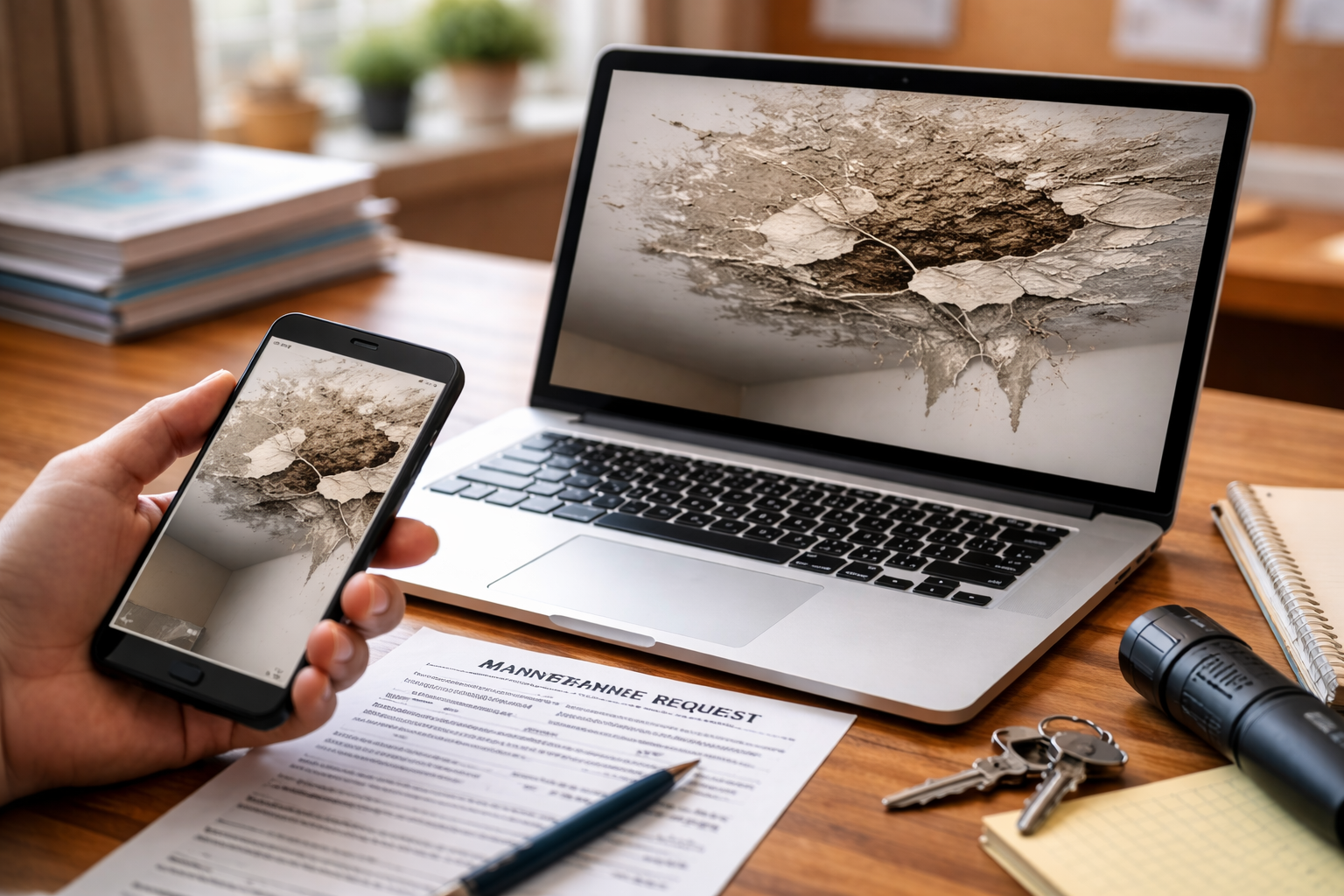
Best move: written notice with photos + request a repair date. In a repairs ignored by landlord situation, spreading damage creates liability — your record matters.
Case C — Safety risk (you feel unsafe using part of the unit)
- Outlet sparks or buzzes
- Gas smell or suspected leak
- Broken locks or security-related failures
Best move: immediate written notice, plus a same-day call. If this is ignored, you may need to contact local code enforcement or emergency services depending on risk level.
Case D — Health risk (mold, sewage, infestation, chronic moisture)
- Mold smell or visible growth
- Sewage backup or drain smells that persist
- Roaches/rodents worsening
Best move: detailed photo/video record + written request for inspection + ask for remediation timeline. Health issues are where repairs ignored by landlord can become serious.
Case E — They promise “next week” repeatedly
- Multiple verbal promises
- No scheduled appointment
- No vendor name or date
Best move: switch to a written timeline request. Ask one clear question: “What date is the repair scheduled?” Silence becomes a pattern you can prove.
Case F — They claim you caused it
- “Tenant damage” accusation
- Threats to charge you
- Refusal to repair without inspection
Best move: request inspection in writing and keep the tone calm. Provide photos showing conditions. A repairs ignored by landlord situation can turn into a deposit dispute later, so record everything now.
The 48-Hour Tenant Action Plan (Built for Real Results)
If repairs ignored by landlord continues, you need a plan that creates urgency without creating chaos.
- Step 1: Take dated photos and a short video (include a wide shot + close-up).
- Step 2: Write a one-paragraph summary: what, where, when you noticed it, and why it matters.
- Step 3: Submit a written request (email or portal) asking for a repair date, not “a response.”
- Step 4: If no timeline within 48 hours, follow up once and ask for escalation to property manager.
- Step 5: If it’s safety/health risk, ask about temporary mitigation (dehumidifier, shutoff, alternate unit, etc.).
Your goal is to convert the issue from “a complaint” into “a documented risk with a deadline.”
A Message Template That Usually Gets a Faster Reply
Hello [Landlord/Property Manager],
I’m writing to follow up on the repair issue in my unit. The problem is [brief description] located at [location]. I first reported it on [date]. Photos are attached.
Because the issue is [spreading / affecting safety / affecting basic living conditions], please confirm the scheduled repair date and time. If a vendor is assigned, please share the name and appointment window.
Thank you,
[Your name]
[Unit #]
Notice the strategy: factual, calm, and timeline-focused.
What NOT to Do (Even If You’re Furious)
When repairs ignored by landlord happens, tenants often take actions that feel satisfying but weaken their position.
- Don’t rely on phone calls only. Always follow up in writing.
- Don’t threaten lawsuits in the first message. Escalate in steps.
- Don’t withhold rent impulsively. Rules vary by state and mistakes can backfire.
- Don’t make major repairs yourself without written notice. It can create disputes over cost and damage.
The safest approach is “document first, escalate cleanly.”
How This Can Affect Your Money Later
A repairs ignored by landlord pattern often connects to future disputes, especially around deposits and fees. If the landlord later claims damage, your earlier record can protect you.
If you suspect this will become a “tenant damage” argument later, that guide helps you prepare evidence in the right format.
Key Takeaways
- repairs ignored by landlord is often a system problem — but your protection strategy is documentation + timelines.
- Spreading damage and safety issues should be escalated faster.
- Written requests with photos and a repair date request get better results.
- Don’t take impulsive actions that create lease risk.
FAQ
How long can a landlord ignore repairs?
It depends on severity. Safety and habitability issues should be addressed quickly. Document your timeline so you can prove delays.
Should I call code enforcement?
If the issue is a genuine safety or health hazard and you’ve documented attempts to resolve it, local authorities may be an option. Start with written notice first unless it’s an emergency.
Can I stop paying rent?
Don’t do this impulsively. State rules vary, and withholding rent the wrong way can harm your lease position.
What if they blame me?
Ask for an inspection and keep everything in writing. Provide photos showing the condition and when you reported it.
repairs ignored by landlord situations rarely explode overnight. They grind down your patience slowly — leak by leak, delay by delay — until you realize you’re living with risk you didn’t agree to.
So do this today: send the written notice, attach the photos, and ask for an actual repair date. When you create a record and request a timeline, you stop being easy to ignore.