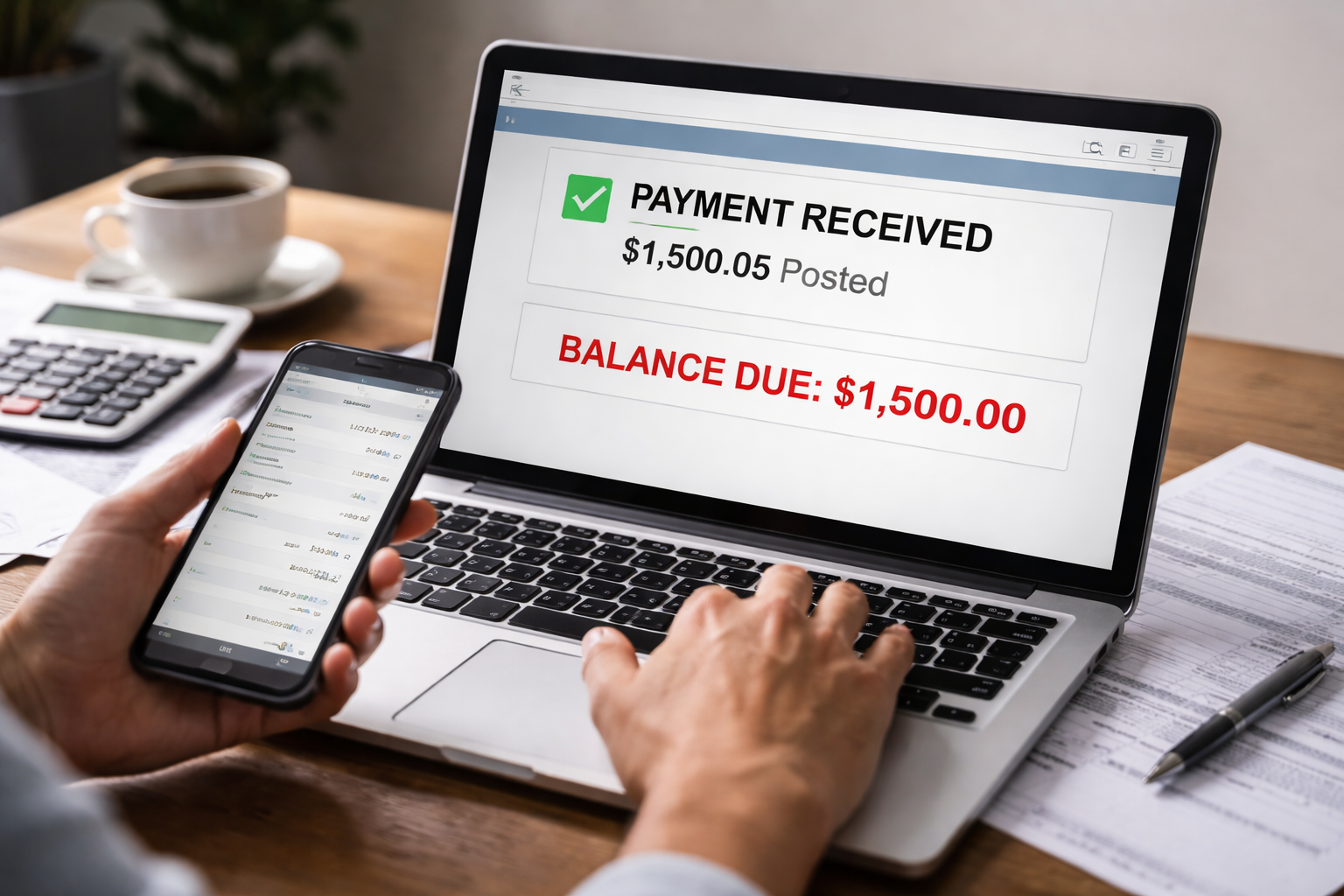
Rent Payment Posted to Portal But Balance Still Shows Due was the exact phrase running through my head the moment I opened the tenant portal for a second time just to make sure I was not imagining it. The payment was there in the activity line. The amount matched what I had sent. The date was right. There was even a confirmation number. But the total due on the same screen still looked wrong, like the system had accepted the money and then refused to count it. That is the kind of mismatch that instantly changes a normal rent payment into a serious housing problem.
The first reaction in that moment is usually confusion, then pressure. You start asking yourself whether the landlord can still charge a late fee, whether the portal is behind, whether you need to pay again, or whether the property manager is about to say the account is delinquent even though the payment is right there on the screen. Rent Payment Posted to Portal But Balance Still Shows Due is not just an annoying display problem. In real life, it can turn into a ledger dispute, a pay-or-quit notice, a collection threat, or an argument over whether rent was actually satisfied on time. The biggest mistake is treating this like a harmless glitch and waiting too long while the account continues to age as unpaid on the landlord side.
When this happens, it helps to understand that the tenant portal is often only one layer of a larger accounting system. What you see in the portal is not always the same thing the landlord sees in the internal ledger. That difference is exactly why Rent Payment Posted to Portal But Balance Still Shows Due can happen even when the money appears to have gone through.
If the property manager is claiming they do not see the payment at all, this nearby guide covers that version of the problem.
Why This Screen Can Be So Misleading
Rent Payment Posted to Portal But Balance Still Shows Due often happens because the portal, the payment processor, and the rent ledger do not update in the same order. A tenant usually assumes that once a payment appears in the portal, the rent obligation has been fully satisfied. But many landlord systems do not work that way. A payment can be recorded as received before it is fully allocated. It can be posted to transaction history before it is matched to a rent charge. It can even appear in the tenant-facing interface while the accounting ledger still shows an outstanding balance.
That is why two things that look contradictory can both be true at the same time. The payment may be real, and the ledger may still show due. Rent Payment Posted to Portal But Balance Still Shows Due usually means the issue is not whether money was sent, but how the system applied that money after receipt.
What Usually Causes It
Detailed case branches that often explain this situation
- Ledger allocation delay: the payment shows as posted, but the system has not yet applied it to the actual rent line.
- Older charges absorbed the payment: prior late fees, utility bills, legal fees, or small carryover balances were paid first.
- Partial payment logic: the amount sent was real, but not enough to fully satisfy all charges currently sitting on the account.
- Portal and ledger out of sync: the tenant-facing portal refreshed before the accounting side completed overnight reconciliation.
- Payment date versus effective date mismatch: the portal shows the date the payment was submitted, but the ledger uses the settlement date.
- Wrong ledger bucket: the money was applied to another month, another unit, another roommate ledger, or a non-rent charge.
- Returned item risk hold: the portal displayed the payment first, but the system later flagged it pending final bank confirmation.
- Manual review queue: some property managers place certain electronic payments into exception review before clearing them fully.
Each of those branches can produce the same outward result: Rent Payment Posted to Portal But Balance Still Shows Due. That is why looking only at the top-line balance rarely tells you what is actually wrong.
When the Money Went Somewhere Else First
One of the most common reasons for Rent Payment Posted to Portal But Balance Still Shows Due is that the payment did not go entirely to current-month rent. Many tenants assume the system will apply funds to the newest rent line first. In practice, many landlord systems do the opposite. They apply money based on internal charge priority. If the account had a prior late fee, utility bill, damage charge, insufficient funds fee, holdover balance, or previous month shortfall, the system may have used the new payment there first.
That means the payment is not missing. It was simply consumed somewhere the tenant was not focusing on. From the landlord side, the ledger may show a completely logical allocation. From the tenant side, it feels like the portal accepted rent but still refuses to count it. This is one of the most important reasons tenants should review the full ledger, not just the payment confirmation line.
If you suspect money was sent to the wrong place inside the account, this related guide is the closest match.
When the Amount Was Not Enough Even Though It Looked Right
Another reason Rent Payment Posted to Portal But Balance Still Shows Due happens is that the tenant paid the normal rent amount, but the account total had quietly increased. This often happens when an auto-generated late fee, utility reconciliation, parking charge, pet fee, month-end carryover amount, or lease violation fee was added after the tenant last checked the account. The tenant sends what they believe is full rent. The portal posts the payment. But the ledger still shows a due amount because the account balance was higher than expected.
This is the kind of problem that catches people off guard because the payment itself was not wrong in their mind. The system simply had a different number in its ledger than the tenant expected. Rent Payment Posted to Portal But Balance Still Shows Due can therefore be a sign that the account contains more than one charge category.
What the Landlord or Property Manager May Be Seeing
From the property manager’s side, they may not be looking at the same screen you are. They may be reviewing a summary ledger, an aging report, a delinquency queue, or a collections dashboard. Those internal tools are usually designed to flag unpaid balances, not to reassure tenants that a payment entry exists. So even if your portal shows the payment line clearly, the manager may still see the account listed as unpaid or partially unpaid.
That disconnect is one reason this issue escalates so easily. Rent Payment Posted to Portal But Balance Still Shows Due can trigger automatic follow-up actions if nobody manually reviews the account. A system can generate reminders, late fees, or notice workflows based on the ledger balance rather than the tenant-facing receipt history. The more automated the property management company is, the less likely this gets fixed on its own without a direct request.
What To Check Before You Contact Them
Before reaching out, gather everything that proves the sequence of events clearly. This matters because vague complaints usually get generic responses. A clean documentation package makes it easier for the manager to fix the ledger quickly.
- screenshot showing the portal payment entry
- screenshot showing the remaining balance due
- receipt or confirmation number
- bank transaction record if available
- date and time payment was submitted
- payment method used
- exact amount sent
Then compare the posted payment amount to the full account balance, not just base rent. Look for any small charge that may have remained. Rent Payment Posted to Portal But Balance Still Shows Due is often solved when the tenant realizes the account balance included more than just one month’s rent.
How To Frame the Message Correctly
When contacting the landlord or manager, the goal is not just to say the portal looks wrong. The goal is to direct them toward the specific accounting issue. Instead of writing something broad like “my rent is still showing due,” it is better to say that the portal shows a posted payment but the ledger balance still appears outstanding, and you are asking them to confirm how the payment was allocated.
That wording matters because Rent Payment Posted to Portal But Balance Still Shows Due is usually not a question of whether a payment exists. It is a question of whether the ledger has applied it correctly. Asking for an allocation review gets closer to the real issue than simply asking whether they received the payment.
What Not To Do
There are several mistakes that can make this situation much worse.
Avoid these high-risk moves
- Do not send a second rent payment immediately unless the first one is confirmed failed.
- Do not assume the system will clean itself up while notices continue to generate.
- Do not rely on a phone call alone without written follow-up and screenshots.
- Do not dispute the bank transaction too early if the payment is still capable of being allocated correctly.
- Do not ignore even a small leftover balance because that can become the basis for late fees or default language.
The duplicate-payment risk is real. A tenant panics, pays again, and later discovers the first payment was real all along. If that has happened already, read this before taking the next step.
When This Starts Turning Into a Notice Problem
If Rent Payment Posted to Portal But Balance Still Shows Due remains unresolved, the issue can move beyond a portal mismatch. Some systems automatically issue pay-or-quit notices or delinquency warnings based on the ledger balance. That means a tenant can have a payment receipt in hand and still receive a formal nonpayment notice because the internal ledger never zeroed out.
This is where timing matters most. Once a notice appears, the account is no longer just in a customer-service stage. It starts entering an enforcement stage. Even if the landlord later agrees the payment existed, it is much easier to correct the issue before it reaches notice or filing status.
If an online payment was followed by a nonpayment notice, this related guide fits that scenario closely.
What Usually Resolves It Fastest
The fastest resolution usually comes from asking one very specific thing: request that the property manager review the tenant ledger and confirm exactly how the posted payment was applied. That one step cuts through most confusion. If the payment was held pending settlement, they can tell you. If it was applied to fees first, they can tell you. If it was misapplied to another ledger bucket, they can move it. If the portal and ledger are simply out of sync, they can confirm that too.
Rent Payment Posted to Portal But Balance Still Shows Due becomes much easier to handle once the conversation shifts from “I paid” to “please confirm the payment allocation and current ledger status.” That framing turns a stressful argument into an accounting review, which is usually where the real answer is found.
Official Consumer Guidance
For general consumer guidance on documenting payment problems and resolving disputes, see the official federal resource below.
Consumer Financial Protection Bureau – Consumer Tools
Key Takeaways
- Rent Payment Posted to Portal But Balance Still Shows Due usually means the payment exists but has not been applied the way the tenant expects.
- The most common causes are allocation delay, older charges, partial-balance logic, and ledger sync problems.
- A payment entry in the portal does not always mean the rent charge has been fully satisfied in the landlord ledger.
- Waiting too long can lead to late fees, automated notices, or escalation based on the ledger balance.
- The best next step is a written request for the landlord or manager to review the payment allocation and current ledger status.
FAQ
Why does my portal show rent paid but still say I owe money?
Rent Payment Posted to Portal But Balance Still Shows Due often happens when the payment record was created before the ledger finished applying the funds to rent. It can also happen when older fees or charges were paid first.
Does this mean my payment failed?
Not necessarily. In many cases, the payment is real and visible, but the accounting system has not reconciled it fully or has allocated it elsewhere.
Should I pay again right away?
No. Paying again too quickly can create a double-payment problem if the first payment later clears correctly into the ledger.
Can I still get a late fee even if the payment shows posted?
Yes, in some systems the late-fee trigger is based on the ledger balance, not just the visible portal transaction line.
What should I ask the property manager?
Ask them to confirm how the payment was allocated and whether the current ledger balance reflects any prior charges, fees, or synchronization delay.
What To Do Right Now
If Rent Payment Posted to Portal But Balance Still Shows Due is on your screen right now, save the receipt, save the balance screenshot, and send a written message today asking the property manager to review the ledger allocation. Do not send a second payment unless the first one is clearly marked failed. Do not let the issue sit long enough for the system to roll it into a late fee or notice cycle.
The fastest path forward is not guessing, waiting, or arguing in circles about what the portal “should” mean. It is getting the landlord side to confirm where the payment sits inside the ledger and whether any other charges are still open. That is the step that turns a confusing screen into a fixable account issue before it grows into something more serious.