
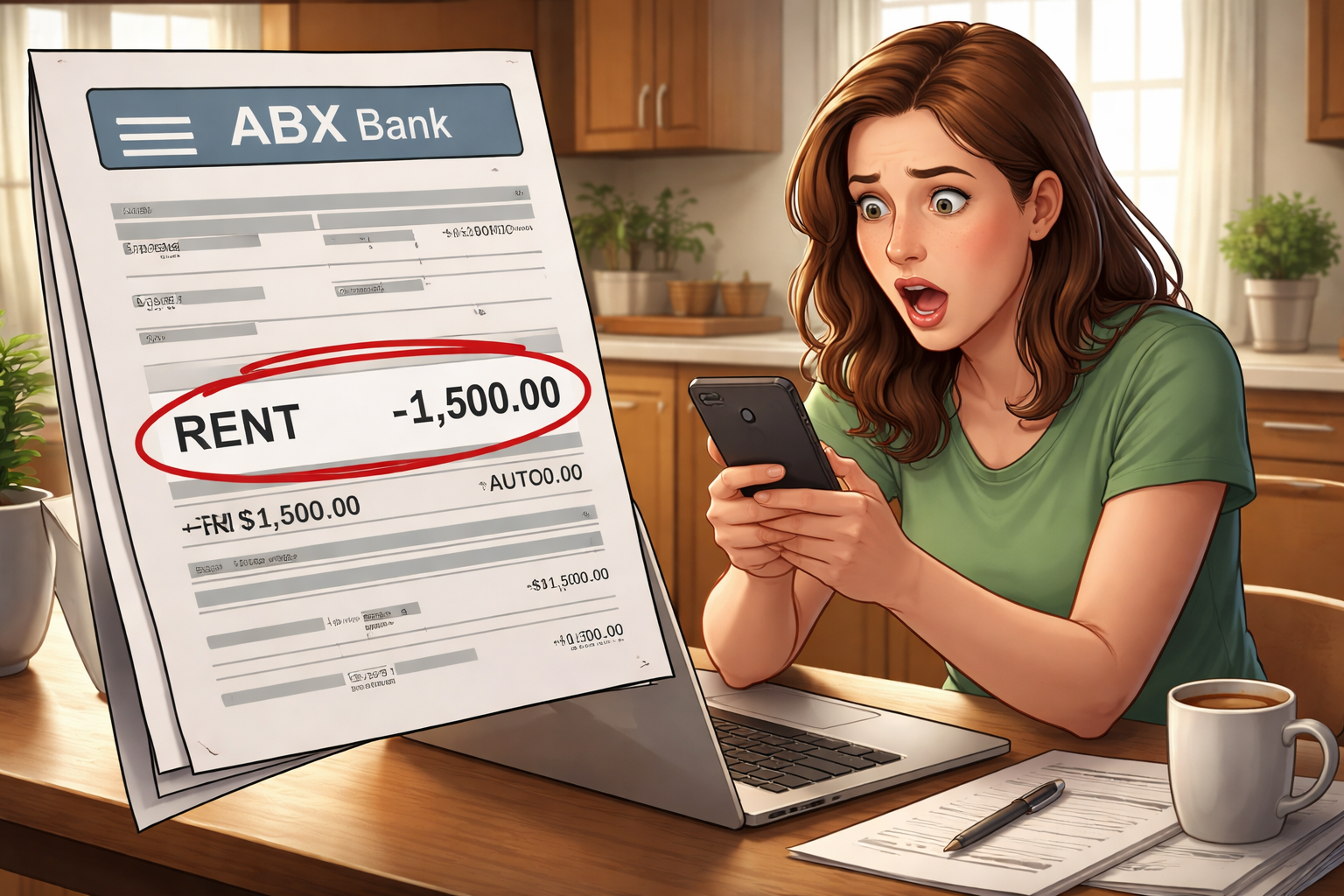
Rent Payment Auto-Pay Processed After Cancellation and Still Charged was the problem the moment I opened my bank app and saw a rent withdrawal that should not have been there. I was not guessing. I was not confused about the date. I had already gone into the portal, turned auto-pay off, and left the page thinking it was done. Then the charge hit anyway. It did not show as pending. It was not a small authorization hold. It looked like a normal completed rent payment, which made the whole thing worse because completed transactions are the ones people expect you to simply accept.
The first reaction in a situation like this is usually to assume you clicked something wrong or canceled too late. That is exactly why this problem drags on. Rent Payment Auto-Pay Processed After Cancellation and Still Charged often looks like a tenant mistake from the outside even when the real issue is inside the handoff between the portal, the payment processor, and the landlord ledger. If you treat it like a simple refund request instead of a system-execution error, you can lose time, lose leverage, and sometimes even create a second balance problem on the account.
If you want the closest hub article first, this guide explains how payment posting mistakes move through landlord systems and why they often do not correct themselves on their own:
Why this happens after auto-pay was already canceled
Rent Payment Auto-Pay Processed After Cancellation and Still Charged usually happens because the cancellation you made affected only the visible front-end setting, not the payment instruction that had already been queued in the back-end system. In many rental platforms, the tenant dashboard is only one layer. The actual transaction may be handed off to a separate ACH processor or recurring billing engine before the due date arrives.
That means a tenant can log in, see the toggle switched off, and reasonably believe the issue is over. But the billing engine may already have a scheduled file created for that cycle. Once that file is generated, the portal can look updated while the charge still goes out. The most important thing to understand is that “auto-pay off” does not always mean “next debit canceled.” Sometimes it only means “future scheduling disabled after the current batch.”
This is why the wording matters. If you complain vaguely that you were “still charged,” support may answer with a generic line that the payment was already in process. But Rent Payment Auto-Pay Processed After Cancellation and Still Charged is not just about whether money moved. It is about whether the cancellation took effect at the system level where the payment was actually executed.
Where the system usually breaks
There are several points where Rent Payment Auto-Pay Processed After Cancellation and Still Charged can originate:
First, the tenant portal may record the setting change but fail to push that change to the recurring payment processor in time. Second, the processor may accept the cancellation instruction but not apply it to a payment already queued for transmission. Third, the landlord management software may import the successful payment after the fact and show it as ordinary rent received, even though the tenant had canceled auto-pay before the withdrawal date. Fourth, the property manager may only see the ledger result and have no idea the debit itself is being disputed.
That disconnect is why tenants often get frustrating responses that seem incomplete. The landlord says the money was received, the processor says the charge was already in motion, and the bank says talk to the merchant first. Meanwhile, the account balance can change in ways that create a second problem. Rent Payment Auto-Pay Processed After Cancellation and Still Charged can quickly turn into a posting, refund, or duplicate-payment dispute if nobody freezes the narrative early.
What the landlord usually assumes when this happens
From the landlord side, Rent Payment Auto-Pay Processed After Cancellation and Still Charged usually does not appear as a billing malfunction. It appears as rent paid. That matters because the landlord’s next action is often based on the ledger only. If the ledger shows money received, the property manager may assume there is nothing to fix unless you specifically say the payment should not have executed.
Some managers will also assume that if the payment landed, it can simply stay on the account and roll forward. That may sound convenient, but it is not always safe. If you had already sent another payment manually, the extra amount may be moved to future rent, fees, or an old balance. If you were moving out, the funds may sit against a closed or nearly closed account and complicate your final statement. The danger is not only the unwanted debit itself. The danger is how that debit gets classified after it lands.
Detailed situation breakdown
1) Auto-pay was canceled a few days before the due date, but the rent still came out
This is one of the most common versions of Rent Payment Auto-Pay Processed After Cancellation and Still Charged. The likely explanation is that the payment batch had already been built before you changed the setting. The portal showed the change, but the batch file was already locked for transmission. In this version, the strongest evidence is the cancellation timestamp compared with the withdrawal date and any language in the portal about cutoff times.
2) Auto-pay was canceled, then you paid manually, and both payments went through
This is where Rent Payment Auto-Pay Processed After Cancellation and Still Charged becomes more expensive. The first unwanted debit may not be the only problem anymore. Now the landlord ledger can show a duplicate. One payment may be assigned to current rent and the other may be pushed forward automatically, or worse, applied to fees or prior balances depending on system rules. This version needs both a charge review and a ledger review.
3) Auto-pay was canceled because you were moving out, but another rent debit still processed
This version can become messy fast. If the lease end, notice date, or move-out workflow did not fully deactivate the billing profile, Rent Payment Auto-Pay Processed After Cancellation and Still Charged can hit after you thought the account was closing. Money may then sit against a final account statement, deposit reconciliation, or supposed move-out charges. In that situation, you need written confirmation of whether the charge belongs to rent, damages, final utilities, or nothing at all.
4) Auto-pay was turned off in the portal, but the same thing happens again next month
When Rent Payment Auto-Pay Processed After Cancellation and Still Charged repeats, that usually means the recurring instruction still exists in the payment processor even though the portal view suggests otherwise. This is no longer a one-time timing problem. It is a profile-sync failure or incomplete cancellation. You need direct confirmation that the recurring authorization itself has been removed from the processor level, not just hidden or toggled in the tenant dashboard.
5) The charge went through, then the landlord says they cannot refund until the payment clears internally
This version often leads to delay. The landlord may not be wrong that funds have to settle before they can be reversed, but Rent Payment Auto-Pay Processed After Cancellation and Still Charged should still be documented immediately as an execution error. Waiting silently for a refund is risky because the ledger may keep updating while you wait. Ask whether the payment will remain applied to rent during the settlement period and whether late fees, notices, or credits will be affected.
6) The charge went through, but the portal still says rent unpaid or pending
This is a split-system problem. Rent Payment Auto-Pay Processed After Cancellation and Still Charged may have executed at the bank level but not yet synced to the property ledger, or the landlord may be holding the transaction in a pending import status. If the due date or grace period is close, this can trigger late fees or notices even though money already left your account. In this version, your goal is not only reversal or correction but immediate written protection against late treatment.
What you should collect before anyone starts blaming you
Rent Payment Auto-Pay Processed After Cancellation and Still Charged gets harder to fix once the conversation becomes informal and memory-based. Save the proof before you start calling around. Take screenshots showing that auto-pay was disabled. Save the date and exact time if visible. Capture the bank transaction with the posting date, amount, and merchant descriptor. Save any email or on-screen message that confirmed the cancellation request. If there is a lease-end or move-out notice involved, keep that too.
This is not overkill. These cases often turn on tiny timing details. If the portal says cancellation must occur by a certain cutoff hour, you need to know whether you acted before or after that point. If support later claims the payment had already been queued, you want evidence showing what you saw and when you saw it. The faster you preserve the record, the less room there is for the issue to be reframed as your misunderstanding.
What to say to the landlord or property manager
Do not write a long emotional message. Keep it clean. State that Rent Payment Auto-Pay Processed After Cancellation and Still Charged occurred after you disabled recurring payment, give the cancellation date, give the debit date, and ask three direct questions: was the payment already queued before cancellation, how is the payment currently applied on the ledger, and what corrective path they are offering. This forces the conversation toward facts.
If your situation overlaps with balance mismatches after a payment lands, this article helps explain what happens when the ledger keeps showing money due after a transaction posts:
You are trying to prevent a second argument, not just win the first one. Rent Payment Auto-Pay Processed After Cancellation and Still Charged can turn into “your balance is still wrong” within days if the landlord applies the funds in a way you did not expect.
What to do with your bank
If the landlord or processor does not give a clear fix, contact your bank promptly. Explain that Rent Payment Auto-Pay Processed After Cancellation and Still Charged occurred after you canceled the recurring debit and that you are documenting it as an electronic payment error. Do not accidentally describe it as a voluntary duplicate unless that is exactly what happened. The framing matters because the bank’s investigation category may affect how the issue is handled.
The Consumer Financial Protection Bureau explains what to do when there is an error on your bank account and why prompt notice matters. See the official guidance here: CFPB guidance on bank account errors.
Rent Payment Auto-Pay Processed After Cancellation and Still Charged does not always mean the bank will reverse it immediately, but it does mean you should not wait around hoping the property manager will automatically clean it up. Start the documentation clock.
Mistakes that make this much harder to fix
One common mistake is paying rent again without first confirming how the unwanted charge is being treated. Another is disputing the bank charge immediately without telling the landlord that the payment executed after cancellation. Another is assuming that because the portal now shows auto-pay off, the problem cannot repeat. Another is speaking only by phone and leaving no written trail.
Rent Payment Auto-Pay Processed After Cancellation and Still Charged is a system-sequence problem. Sequence matters. If you create the wrong next step, the account history can make you look inconsistent even when you were right from the start. Always confirm whether the payment is being held, applied, reversed, or rolled forward before you take your next financial step.
What to do in the next 48 hours
First, lock down proof of the cancellation and the debit. Second, send a written message to the landlord or property manager asking how the payment was triggered and how it is currently applied. Third, ask whether they can stop any late fee, notice, or account action while the issue is under review. Fourth, if you already made a manual payment too, ask whether the duplicate is sitting on current rent, future rent, fees, or an older balance. Fifth, contact your bank if the merchant side does not give a clear correction path.
Rent Payment Auto-Pay Processed After Cancellation and Still Charged is manageable when handled early and precisely. It becomes expensive when people treat it like a normal annoyance and wait for the software to fix itself.
Key Takeaways
Rent Payment Auto-Pay Processed After Cancellation and Still Charged usually happens because the visible portal setting and the actual payment engine are not perfectly synchronized.
It is not only an unwanted debit problem. It can become a posting, duplication, late-fee, or final-account problem depending on how the funds are classified.
The best fix starts with documentation, clear wording, and fast confirmation of how the landlord ledger is treating the money.
If it repeats, assume the recurring authorization still exists somewhere beyond the portal view.
FAQ
Can a rent auto-pay still go through even after I turned it off?
Yes. Rent Payment Auto-Pay Processed After Cancellation and Still Charged can happen when the next debit was already queued before the cancellation reached the payment processor.
Should I let the extra payment sit and count for next month?
Not unless you confirm that is exactly how the landlord is applying it. Otherwise you may create a balance, fee, or reconciliation problem later.
What if I also paid manually after canceling auto-pay?
Then you need both a debit review and a ledger review. Duplicate payments can be applied in ways that create confusion later.
What if I moved out and the auto-pay still hit?
Ask for written clarification about whether the payment was applied to rent, final charges, or remains unapplied. Closed-account situations can become messy quickly.
Can this affect eviction notices or late fees?
Yes, especially if the bank shows the debit but the portal or landlord ledger still shows unpaid or pending during the same period.
Rent Payment Auto-Pay Processed After Cancellation and Still Charged feels minor at the exact moment it happens because the money has already moved and the system looks final. But the real risk starts after that first debit, when the charge gets classified in the wrong place and everybody assumes the other system will fix it. Do not leave that gap open. Put the timeline in writing, force a clear answer on how the payment is applied, and move fast enough that the problem stays a payment error instead of turning into a ledger dispute.
Before you leave this issue behind, read the next practical step if the payment problem starts affecting notices, collection risk, or account escalation:
That is the point where many tenants lose control of the story. Do not wait for the system to sort itself out when you already know the payment should not have executed in the first place.