
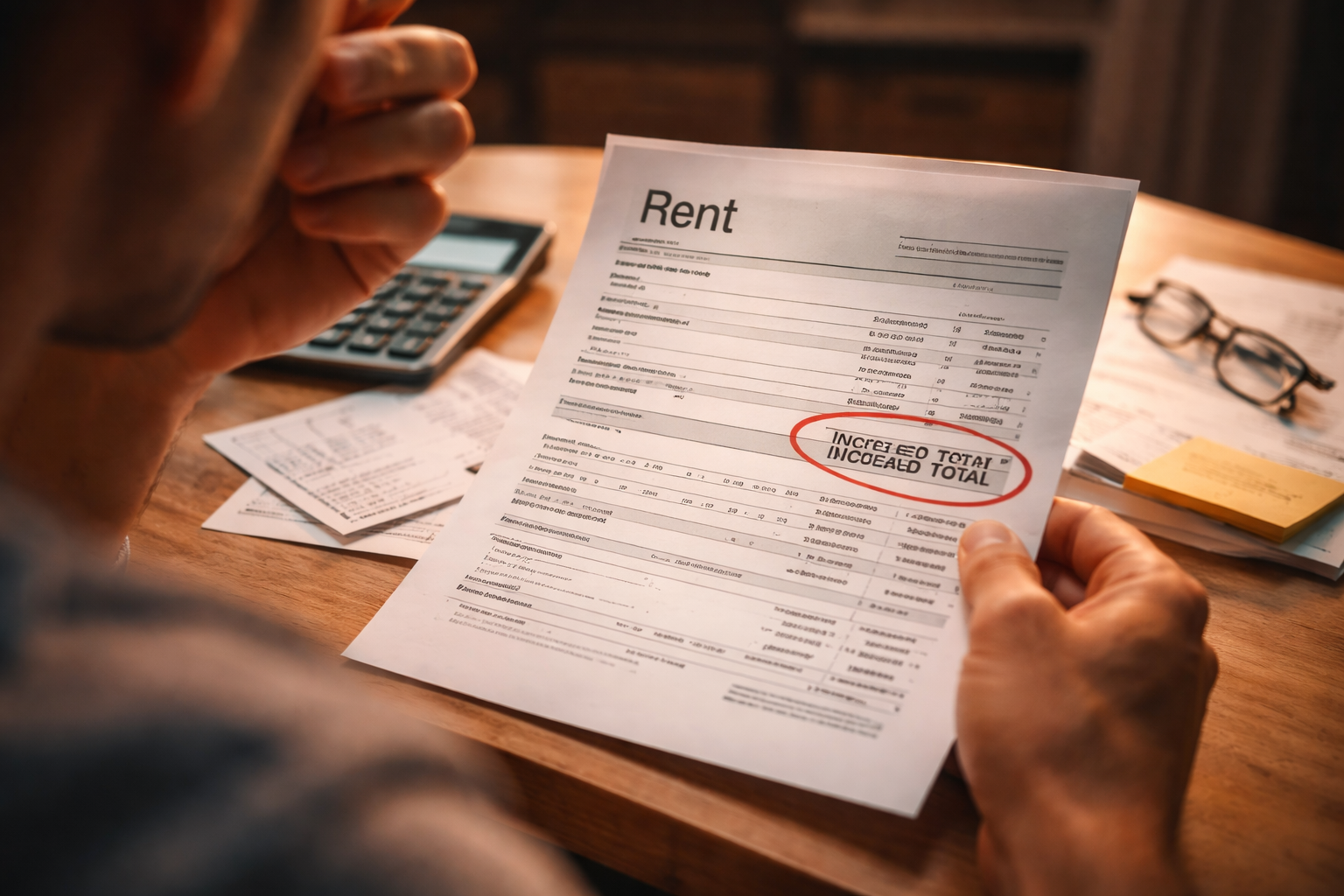
Rent overcharged how to dispute. I realized it the moment I opened my rent payment confirmation. The total looked slightly higher than usual—not enough to scream fraud, but enough to make my stomach tighten. I pulled up last month’s statement. Same lease. Same unit. Different number.
I didn’t panic. I stared at the screen, recalculating in my head. Maybe I forgot something. Maybe there was a new fee. But when rent is overcharged, the confusion always comes before the anger. And if you don’t slow down right here, you can easily make the situation worse instead of fixing it.
Before disputing anything, it helps to confirm whether the issue is an overcharge or a duplicate transaction. This guide walks through that distinction clearly:
Why Rent Overcharges Happen More Often Than People Think
A rent overcharged how to dispute situation rarely comes from a single cause. In most cases, it’s a system issue layered on top of unclear communication.
Overcharges commonly happen when rent management software updates, when utilities are bundled incorrectly, or when a landlord manually adjusts fees without realizing the impact. Most overcharges are not announced because they are not always intentional.
- Incorrect application of annual rent increases
- Fees carried over from a prior tenant or lease term
- Utility or amenity charges added without notice
- System rounding or autopay calculation errors
What Landlords Usually Assume (And Tenants Rarely Know)
From a landlord’s perspective, rent amounts often feel “set and done.” Once entered into the system, they assume the number is correct. A rent overcharged how to dispute issue may never be noticed unless a tenant speaks up.
Landlords often assume tenants will flag errors immediately. But tenants hesitate because they fear retaliation, lease non-renewal, or being labeled difficult. That hesitation is what allows small overcharges to quietly repeat.
Your Rights When Rent Is Higher Than Agreed
In the U.S., tenants generally have the right to be charged exactly what the lease states—no more, no less. A rent overcharged how to dispute situation is not about refusing rent; it’s about enforcing the written agreement.
You are not required to guess which fees are valid. The burden is on the landlord to explain and justify any increase or added charge.
For official federal-level housing guidance, this resource provides a baseline framework:
The First 24 Hours: What to Do Before You Dispute
When facing a rent overcharged how to dispute issue, resist the urge to immediately accuse. Start with clarity.
- Pull your lease and highlight the rent amount and fee section.
- Compare statements from the last 2–3 months.
- Check payment method (autopay vs manual).
- Document everything with screenshots or PDFs.
Documentation turns emotion into leverage.
Case Branching: Identify Your Exact Overcharge Scenario
Use the cases below to immediately map your situation. This avoids guessing and helps you dispute precisely.
Case A: Rent Increased Without Proper Notice
The monthly rent is higher, but you never received written notice.
- Check state-required notice periods.
- Request written proof of the increase.
- Do not agree verbally to the new amount.
Case B: Fees Added That Aren’t in the Lease
A new line item appears (admin fee, service fee, convenience fee).
- Ask where the fee is authorized in the lease.
- Request removal if it’s not listed.
- Pay only the undisputed rent portion.
Case C: Utility or Amenity Charges Misapplied
Shared utilities or parking/storage fees suddenly increase.
- Ask for meter readings or allocation method.
- Compare with prior months.
- Request a corrected statement.
Case D: Autopay or System Error
The system withdrew more than expected.
- Disable autopay temporarily.
- Notify management in writing.
- Ask for a credit, not a promise.
If the overcharge is tied to sudden changes in rent terms, this guide helps clarify notice rules and next steps:
How to Dispute Rent Without Triggering Conflict
A rent overcharged how to dispute approach works best when it’s calm, written, and specific.
Use language like:
“I noticed my rent for [Month] is higher than the amount stated in my lease. Could you clarify the additional charge and provide the lease section authorizing it?”
This keeps the issue factual, not personal.
What Not to Do (These Mistakes Backfire)
- Don’t ignore the overcharge and “hope it fixes itself.”
- Don’t stop paying rent without explanation.
- Don’t argue verbally without follow-up in writing.
- Don’t assume retaliation is automatic.
If the Overcharge Continues Month After Month
Repeated overcharges change the situation. A rent overcharged how to dispute case becomes a pattern, not a mistake.
- Request a formal account ledger.
- Ask for written correction or credit.
- Document every payment and response.
If ongoing disputes affect your decision to stay or leave, this next guide helps you plan without rushing:
Frequently Asked Questions
Should I pay the overcharged amount first?
Often it’s safer to pay the undisputed portion and dispute the rest in writing.
Can disputing rent hurt my lease renewal?
Asking for clarification is not the same as refusing rent.
How long should I wait for a correction?
A reasonable window is one billing cycle.
Key Takeaways
- Rent overcharged how to dispute starts with documentation.
- Small overcharges become big problems if ignored.
- Dispute calmly, in writing, and with specifics.
- You are enforcing the lease—not breaking it.
What stayed with me wasn’t the extra money—it was how easy it would have been to miss it. Rent overcharges don’t usually arrive with warnings. They blend in quietly.
If your rent looks higher than agreed, act today. Pull your lease, document the difference, and ask for clarification in writing. Fixing it early is how you keep control—without making things worse.