
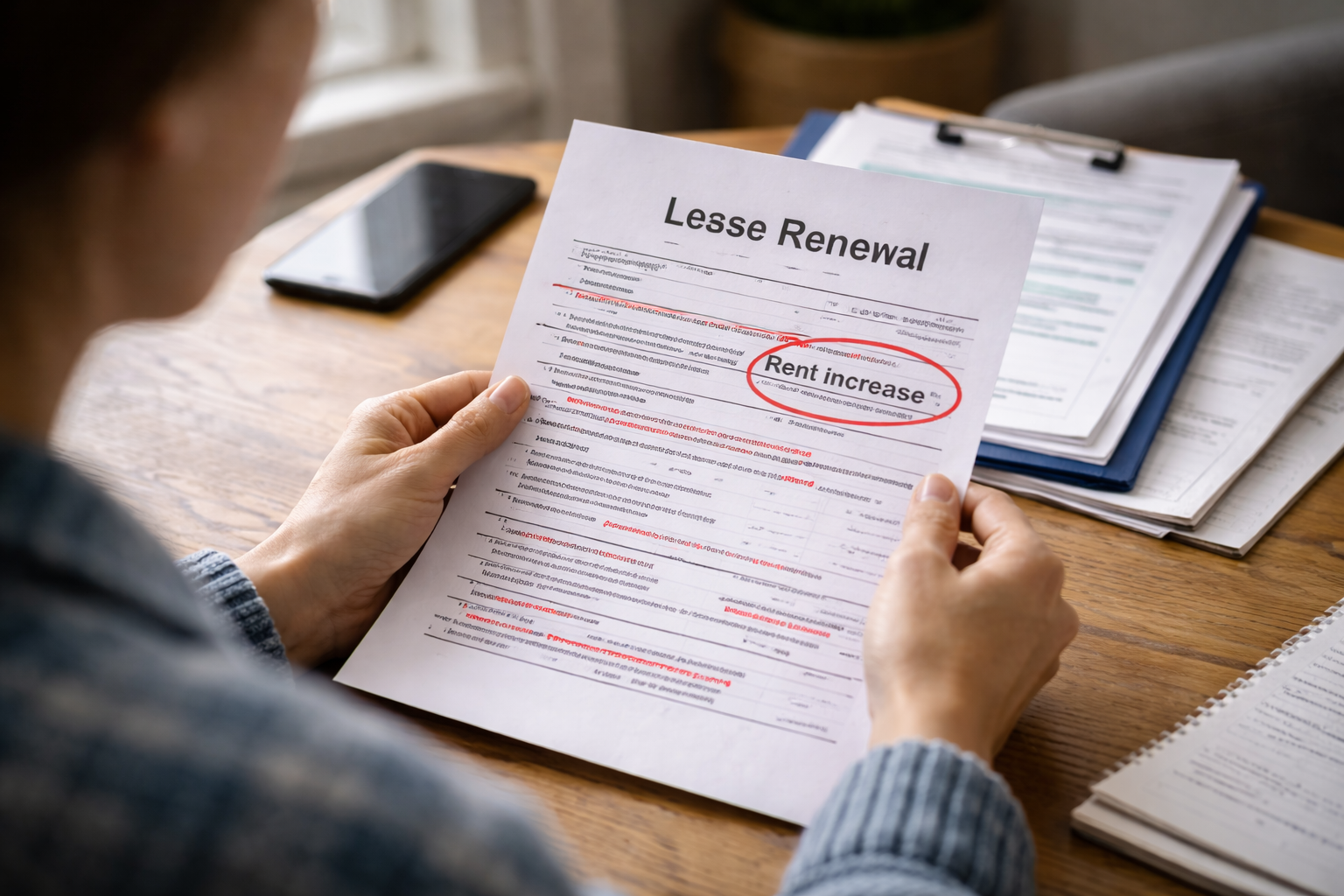
If this just happened to you:
- Do not sign the renewal yet.
- Compare your current lease with the renewal and highlight every change.
- Respond in writing asking for clarification on rent, fees, and deadlines.
Most lease renewal disputes are decided by what you do in the first few days.
Lease renewal dispute what to do is not something you search when life is calm. You notice it when a renewal notice lands in your inbox or on your door and the numbers don’t match last year. Or when a “routine renewal” suddenly includes new rules you never agreed to. The part that stings is how quickly it turns from normal to urgent.
You read it once, then again, because you’re trying to understand whether you’re being pushed… or whether you missed something. You might even feel a split second of guilt before the facts take over: the terms changed, and you’re being asked to sign on a clock. If you’re here because lease renewal dispute what to do is exactly where you are, this guide is built to help you respond in a way that protects your housing and your money—without turning the situation into a mess.
If this dispute started with an unexpected increase, read this first because renewal disputes often overlap with notice problems.
This helps you check whether the increase came with proper notice and how to document the timeline.
Why Renewal Disputes Happen (The Real Mechanism)
Renewal disputes happen because the renewal is usually treated as a reset. Landlords and property managers see it as the moment to update pricing, add clauses, and reduce risk. Tenants see it as the continuation of an agreement that has been working—so changes feel abrupt, even when they’re technically allowed.
In practice, a lease renewal dispute what to do situation usually comes from one of these “system” moments:
- A rent increase is bundled into the renewal offer
- New fees appear (administrative fee, technology fee, “service package” fee)
- Rules change (pet policy, guest policy, parking, utilities, insurance requirements)
- Deadlines become tight (pressure to sign quickly)
- Terms change (12-month becomes 6-month, month-to-month surcharge, etc.)
Most disputes are not about one clause—they’re about power and timing. Your leverage is highest before you sign and before the old lease expires.
Important: Lease renewal rules are not identical across the U.S.
In some states, landlords must give longer advance notice before increasing rent at renewal. In others, notice periods are shorter, but the delivery method matters more than tenants expect. This means the same renewal notice can be valid in one state and questionable in another.
If you are unsure, focus first on timing and written notice before arguing about the amount itself.
Landlord View vs Tenant Reality
Seeing both sides helps you choose the cleanest approach.
Landlord or management view: “We’re offering renewal terms based on policy and market conditions.”
Tenant reality: “I planned my life around stability, and now the price or rules changed overnight.”
Both can be true. But the best outcomes happen when you respond in writing, with specifics.
A Fast Self-Check Before You Respond
Before you send a message or call, use this quick self-check. It helps you avoid reacting to the wrong issue in a lease renewal dispute what to do situation:
- Is the dispute mainly about rent amount?
- Is it mainly about new rules or fees?
- Is it mainly about notice timing or a rushed deadline?
- Did the landlord previously promise something different (email/text)?
- Do you want to stay, or are you weighing move-out?
Your response should match your goal. If you want to stay, you negotiate. If you want to leave, you clarify terms and avoid penalties.
Which Situation Matches Your Renewal Dispute?
Most lease renewal dispute what to do situations fall into a few patterns. Pick the one that matches what changed, then follow the steps inside that box. If two match, start with the one that affects money first (rent and fees) and then address rules.
Case A: Rent Increased at Renewal and the Timeline Feels Wrong
You received a renewal offer with higher rent, but you feel the notice was too short, unclear, or delivered late.
- Check your current lease for renewal and notice language (timing, method of delivery).
- Write down the exact date you received the renewal offer.
- Ask in writing: “Can you confirm the required notice period and the effective date of the increase?”
- Request a breakdown of the increase if it includes fees (not just base rent).
Fastest fix: clarify whether the increase complies with notice rules and whether the effective date can be adjusted.
Common mistake: arguing about “fairness” before confirming whether the timeline itself is defective.
Case B: New Fees or “Packages” Added to the Renewal
The renewal includes new monthly fees (admin, tech, amenities, service packages) that weren’t part of the original deal.
- Ask for an itemized list of fees and what each fee covers.
- Ask whether any fees are optional or tied to a specific service.
- Compare your old lease to the new renewal and highlight new charges.
- If you’re willing to renew, propose a counter: remove or reduce specific fees rather than fighting every line.
Fastest fix: negotiate on a few high-impact fees and request written confirmation of what you are accepting.
Common mistake: signing and hoping fees can be reversed later (they usually cannot once accepted).
Case C: Renewal Terms Changed (Length, Penalties, or New Rules)
The rent might be tolerable, but the renewal adds restrictions or changes the structure: shorter term, new penalties, guest rules, pet rules, parking changes, insurance requirements, or other conditions.
- Identify the top 1–3 clauses that actually change your daily life or risk.
- Ask whether those clauses are “policy-wide” or negotiable exceptions.
- If you need flexibility, request an alternative term (example: 12-month instead of 6-month).
- Ask for clarification on enforcement: “How is this applied in practice?”
Fastest fix: negotiate the highest-risk clauses and get clarification in writing before signing.
Common mistake: focusing on small wording issues while missing the clause that creates fees or penalties later.
Case D: You Were Pressured to Sign Quickly
You were told you must sign within a short window, or you’ll lose the renewal offer or be forced into month-to-month at a higher rate.
- Ask for the deadline in writing and the consequences of not signing by that date.
- Request a short extension to review terms (even 48–72 hours helps).
- Document any threats or inconsistent statements.
- If you need more time, ask what month-to-month terms would be and whether they can be held temporarily.
Fastest fix: move the conversation into writing and slow down the pressure.
Common mistake: signing while confused just to stop the pressure—confusion is where bad clauses survive.
Case E: You Want to Leave, But You’re Afraid of Fees or Penalties
Sometimes the dispute is your signal to move. But you don’t want to create a new problem: termination fees, disputed charges, or “extra rent” claims after move-out.
- Ask for a written move-out cost estimate (fees, notice requirements, final month rent).
- Confirm whether you will be month-to-month automatically if you don’t renew.
- Document your notice (date, method, and confirmation).
- Keep a file of photos and condition documentation to protect your deposit later.
Fastest fix: clarify the exit path early so you don’t trade one dispute for another.
Common mistake: ghosting the renewal process, then being surprised by month-to-month charges or fees.
What to Do First (The Clean, Safe Order)
If lease renewal dispute what to do is your situation, your first steps should be simple and documented:
- Compare old lease vs renewal and highlight changes (rent, fees, term, rules).
- Write a short timeline (when you received notice, when the lease ends).
- Respond in writing with 2–3 focused questions (not a long complaint).
- Ask for clarification on deadlines and consequences if you don’t sign.
Your goal is to create a written record before decisions are locked in.
What Not to Do (Mistakes That Reduce Your Leverage)
- Signing “just to keep the apartment” while you’re still confused
- Ignoring the renewal and hoping it goes away
- Arguing only by phone without any written follow-up
- Threatening legal action before you clarify terms and timeline
Disputes are easier to solve when you stay specific.
If your dispute turns into charges tied to leaving, this is the next issue to understand.
This explains how move-out fees can appear and how to dispute them.
External Reference (Official)
This official HUD page provides general tenant-rights information in the U.S.
Key Takeaways
- Lease renewal dispute what to do is a timing-driven decision point, not just a rent complaint.
- Renewal offers can include new fees and rules—do not sign before you compare.
- Write a short timeline and respond in writing with focused questions.
- If you plan to leave, clarify the exit path early to avoid surprise charges.
FAQ
Do I have to accept the renewal terms?
Usually no. A renewal is typically an offer. Your options may include negotiating, going month-to-month, or moving—depending on your lease and local rules.
Can I negotiate a rent increase at renewal?
Often yes. Negotiation works best when you respond early, stay specific, and propose an alternative (smaller increase, longer term, removal of a new fee).
What happens if I do nothing?
Depending on the lease and local rules, your tenancy may end, convert to month-to-month, or trigger a notice requirement. That’s why documenting your timeline matters.
Your Next Step
If you searched lease renewal dispute what to do, you’re likely standing at a deadline you didn’t ask for.
Today: compare the documents, write your timeline, and respond in writing before you sign anything.
You don’t need to “win an argument” to protect yourself. You need a clear record, a clear choice, and a clean next step.
If renewal disputes lead to unexpected charges (higher rent, extra fees), this guide helps you respond with a structured dispute approach.
This explains how to dispute rent or fees that exceed what was agreed.