
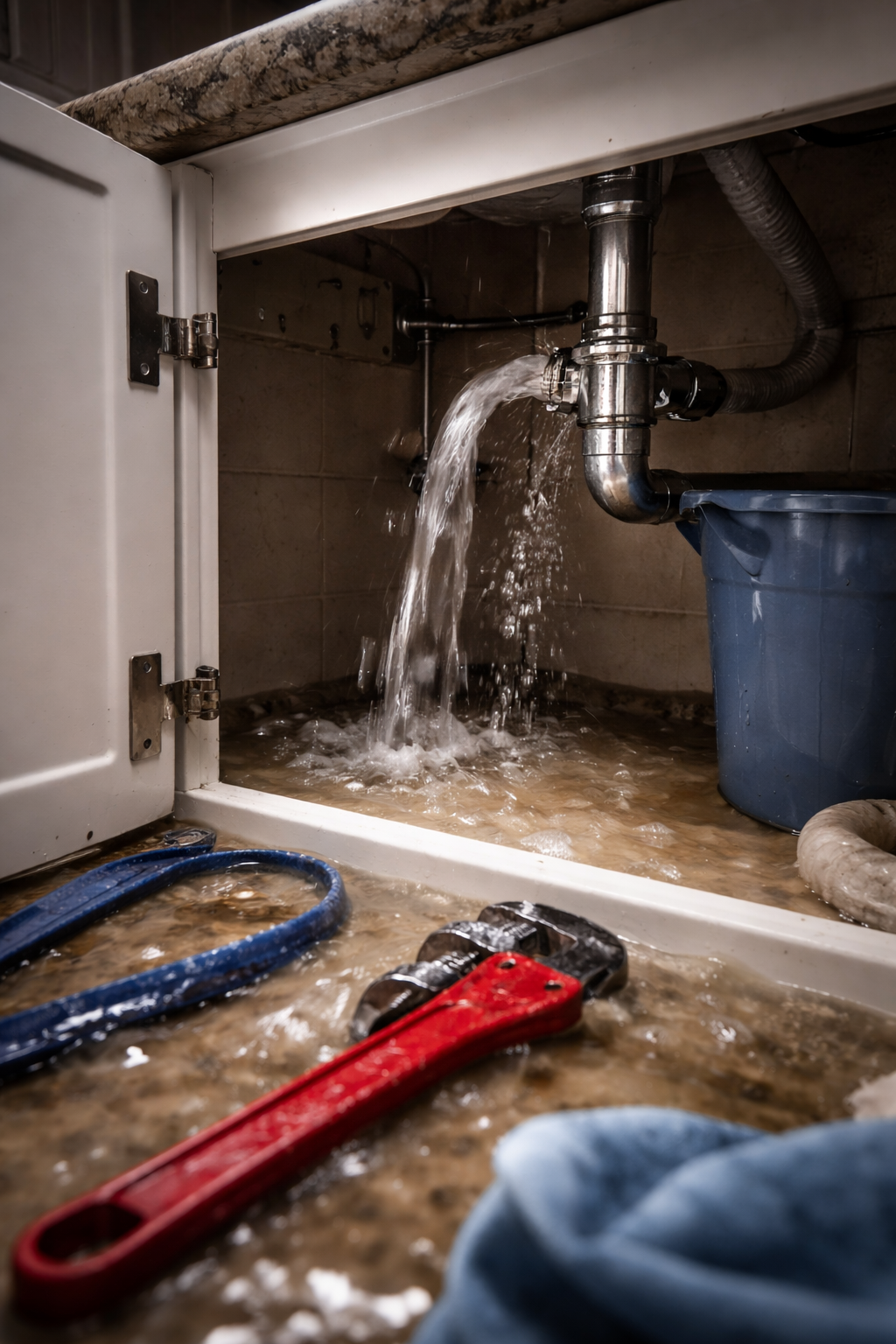
Landlord or tenant pays for plumbing repairs — I didn’t Google it out of curiosity. I Googled it because water was spreading across the floor faster than I could grab towels. It started as a quiet glug in the sink, then the cabinet base felt damp, then the smell hit: that wet, metallic “something is wrong” smell you never forget.
I turned off the faucet, then the shutoff valve, then stood there staring at the damage like it was a bill printing itself in real time. The landlord’s first message wasn’t “Are you okay?” It was “What caused it?” That’s when I realized this wasn’t just a repair — it was a responsibility dispute. And if I said the wrong thing, I might accidentally volunteer to pay.
Here’s the truth most renters learn too late: when landlord or tenant pays for plumbing repairs becomes the question, the first 24 hours matter more than your opinion. Your photos, your words, and your timeline can decide whether the cost is treated as normal property maintenance or tenant-caused damage.
If you’re building a clear “who pays for what” framework across your rental, this hub-style guide helps you compare responsibility logic across different repair categories.
Quick Self-Check: Which Plumbing Situation Are You In?
Before you read further, place yourself in the right lane. This is the fastest way to get the right answer for your exact situation.
CHOOSE YOUR LANE (CIRCLE ONE MENTALLY)
A) Sudden burst / active leak (pipe, valve, supply line)
B) Toilet overflow or backup (unknown cause)
C) Drain clog that got worse over time (sink/tub)
D) Water heater issue (no hot water / leaking tank)
E) Leak from above / shared plumbing (apartment building)
F) “You caused it” accusation + bill attached
Each lane has a different “proof” strategy.
You can still read everything, but keep your lane in mind. It will tell you what to document and what not to say.
What This Dispute Really Comes Down To
Most U.S. states expect landlords to maintain safe, livable housing, including essential systems. But plumbing disputes explode because they’re rarely just “broken.” They’re about cause.
When people argue about landlord or tenant pays for plumbing repairs, it usually comes down to one question:
Was this normal wear/system failure, or tenant misuse/neglect?
That’s it. Not vibes. Not “I’m a clean person.” Not “This building is old.” The outcome is usually decided by documentation and the plumber’s findings.
The 30-Minute Protection Plan (Do This Before You Clean)
If you do only one thing from this article, do this. It keeps you from getting stuck with a bill that isn’t yours.
- Take wide photos of the entire area (so the scale is obvious).
- Take close photos of the suspected source (valve, pipe joint, toilet base, under-sink trap).
- Record a short video if the leak is active (dripping, spraying, bubbling, gurgling).
- Screenshot the time and save it (or include a timestamp in your email).
- Send written notice immediately: email, portal message, or text if that’s the only channel you have.
Do not say “I caused it” or “Maybe it’s my fault.” You can report what you observed without guessing the cause.
This is how you protect yourself when landlord or tenant pays for plumbing repairs becomes a fight.
Sudden Leak vs. Slow Damage
Landlords and insurers look at plumbing problems differently depending on speed.
CASE SPLIT: WHAT THE TIMELINE IMPLIES
Sudden leak (minutes/hours):
• Often suggests system failure (aging pipe, failed seal, defective valve)
• Stronger landlord-maintenance argument
• Your job is prompt reporting + damage prevention
Slow damage (days/weeks):
• Landlord may argue “tenant ignored warning signs”
• Your defense is proof you reported early (even if nothing happened yet)
• Photos of early moisture/staining help a lot
Emergency problems usually help tenants. Delayed reporting helps landlords.
If you’re in the “slow damage” lane, your entire goal is to show you didn’t sit on it.
Clog Disputes (The Most Common Blame Trap)
Clogs are where landlord or tenant pays for plumbing repairs gets messy because both sides can sound reasonable.
CLOG LIABILITY — WHAT TYPICALLY SHIFTS RESPONSIBILITY
More likely landlord responsibility:
• Main line blockage
• Tree roots in sewer line
• Repeated clogs from old piping or poor slope
• Building-wide backups in multi-unit housing
More likely tenant responsibility:
• Foreign objects (toys, hygiene products, wipes)
• Grease disposal
• Disposal jam from improper use
• A single fixture clog with clear misuse evidence
If the clog is “system-wide,” it’s usually not a tenant problem.
If your situation is specifically a drain clog, use this focused guide to avoid overlap and handle the “who pays” logic correctly.
Even if you’re not dealing with a clog, read the pattern: landlords often try to categorize many plumbing issues as “misuse.” Your job is to force cause-based proof.
Toilet Overflow, Backup, or Sewage Smell
Toilets trigger panic because the damage can get nasty fast. They’re also easy for landlords to blame on the tenant (“you flushed something”).
TOILET/BACKUP — HOW TO PROTECT YOURSELF
Step 1: Shut off the water valve behind the toilet (if safe).
Step 2: Photograph the bowl level + any floor seepage before cleanup.
Step 3: Document whether other drains gurgle (sink/tub). That suggests a larger line issue.
Step 4: Ask the landlord one written question: “Is this a main line issue or fixture-level issue?”
If multiple drains react, it often indicates shared plumbing or main line blockage.
This matters because landlord or tenant pays for plumbing repairs is usually decided by whether the issue is localized or systemic.
Water Heater Problems
Water heater issues are usually property maintenance, but landlords sometimes try to shift costs if they claim “tenant caused damage.”
WATER HEATER — WHAT USUALLY POINTS TO LANDLORD RESPONSIBILITY
• Tank corrosion or age-related failure
• Faulty pressure relief valve
• Leaking connections due to wear
• No hot water without tenant interference
What can shift blame toward tenant (less common):
• Physical damage from tampering
• Unauthorized adjustments that cause failure
Most tenants don’t “cause” a water heater to die. Age and wear do.
If your landlord says you owe for a water heater replacement, your best move is to request the plumber’s written cause assessment before agreeing to anything.
Apartments: Shared Plumbing = Different Rules of Reality
In multi-unit buildings, your unit might be the first place you notice a leak, but not the origin. Water follows gravity, not blame.
Leak from above is rarely “your plumbing problem.”
What to document in apartments:
- Ceiling stains and where they start (center vs wall line).
- Whether neighbors mentioned similar problems.
- Whether the building recently did work on lines (shutoffs, renovations).
- Any signs of water traveling along shared pipe chases.
The more shared infrastructure is involved, the stronger your landlord-maintenance argument typically becomes when landlord or tenant pays for plumbing repairs gets challenged.
What to Say (A Message That Doesn’t Backfire)
Use a message that reports facts and requests action without admitting liability.
COPY-PASTE MESSAGE
“Hi [Name], I noticed a plumbing issue on [date/time] at [location]. There is [leak/overflow/water damage]. I shut off the water where possible and took photos/video. Please schedule a professional inspection/repair as soon as possible and share the findings on the cause once assessed. Thank you.”
Notice the key phrase: “share the findings on the cause.” That keeps the discussion evidence-based.
The “Bill Arrived” Scenario: What to Request Before Paying
If a landlord sends you an invoice and says “you pay,” don’t argue emotionally. Ask for proof in a calm sequence.
- Request the plumber’s report (cause, scope, and recommended repairs).
- Ask whether the issue was fixture-level or main line/system-level.
- Ask whether the building has prior history with similar issues.
- Ask what evidence shows tenant misuse or negligence.
Paying first can look like accepting responsibility. If you truly are responsible, you can handle payment after the cause is confirmed. If you’re not, you just protected yourself from a costly mistake.
This is the practical heart of landlord or tenant pays for plumbing repairs: don’t accept a conclusion before you see the cause.
One Official Standard to Keep in Your Back Pocket
Federal housing rules set national standards for the condition of HUD housing and explain that they do not supersede state/local codes, but they reflect the baseline expectation that housing must meet safety and habitability conditions.
This is not a “state law shortcut,” but it strengthens the idea that essential systems are part of livable housing expectations.
Absolute Mistakes to Avoid
DON’T DO THESE (THEY OFTEN LOSE CASES)
• “Sorry, I might have caused it” texts
• Only phone calls (no written trail)
• DIY repairs that alter evidence
• Throwing away damaged parts before inspection
• Waiting days to report while damage grows
Most responsibility disputes are won by the calmer person with better documentation.
Key Takeaways
- landlord or tenant pays for plumbing repairs is decided mainly by cause: system failure vs misuse/neglect.
- Document first. Report immediately. Ask for the plumber’s findings.
- Shared plumbing and main line issues often lean toward landlord responsibility.
- Do not agree to pay until you see evidence.
- Use calm, written communication that focuses on facts.
FAQ
Is the landlord always responsible for plumbing repairs?
No. But many plumbing issues involve property systems and normal wear. The deciding factor is usually cause, not assumptions.
What if the landlord claims I caused the clog?
Ask for the plumber’s written findings and whether it was fixture-level or main line. Do not accept liability without evidence.
Can I withhold rent if plumbing isn’t fixed?
Rent withholding rules vary by state and can backfire if done incorrectly. Escalate in writing first and consider local guidance before taking that step.
What’s the single best thing I can do today?
Send written notice with photos and request the plumber’s report on cause. That protects you in most landlord or tenant pays for plumbing repairs disputes.
When you’re standing in water, it’s tempting to rush into the fastest solution. But landlord or tenant pays for plumbing repairs is one of those moments where speed can cost you.
Your goal is not to “win an argument.” Your goal is to create a clean timeline that makes the responsibility obvious.
So take the photos, send the message, request the report, and keep everything calm and written.
Because if a bill shows up later, the most important question won’t be “who’s louder.” It will be: who documented the truth first?
If the landlord delays or refuses action while the situation worsens, use this next-step playbook before the damage becomes a bigger habitability fight.