
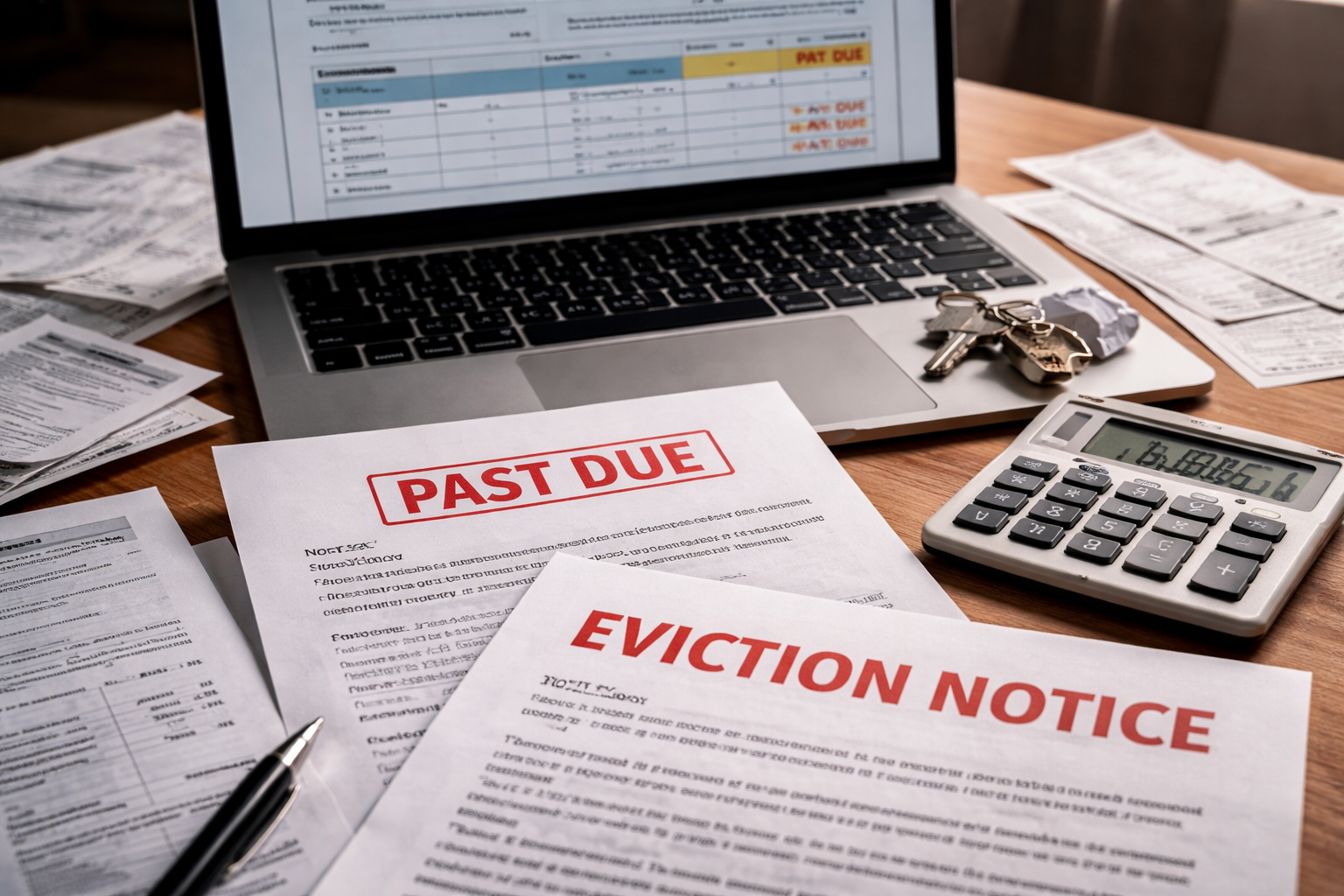
How Rent Payment Posting Errors Happen and What Tenants Should Do Next
The moment this usually becomes real is not when rent is due. It is when you open the portal after paying, see a balance that should not be there, and realize the numbers no longer match what left your bank account. Sometimes the payment shows as pending. Sometimes it shows as posted but the total due does not move. Sometimes a manager says nothing was received even though the money is already gone. That is the point where a routine monthly payment problem becomes a recordkeeping problem, and recordkeeping problems can turn into fee notices, late notices, and eviction pressure faster than most tenants expect. How Rent Payment Posting Errors Happen and What Tenants Should Do Next is not a theory question for most renters. It starts with one wrong line on a ledger and then spreads into every part of the account.
What makes these situations dangerous is that landlords and property managers often treat the ledger as the account truth even when the ledger is incomplete, delayed, or plainly wrong. A tenant may be looking at a bank confirmation while the office is looking at an internal screen that still shows unpaid rent, a reversed entry, or a balance rolled forward from an earlier month. How Rent Payment Posting Errors Happen and What Tenants Should Do Next matters because the problem is rarely just the payment itself. It is the way the payment was categorized, allocated, reconciled, or escalated after posting. The right move is not to argue in broad terms. The right move is to force the record into a format that can be checked line by line and fixed before the account moves into penalty, notice, collections, or court status.
If you are trying to understand the bigger system behind these disputes, start with the payment-side articles first because they map the most common ledger failures tenants face:
Rent Payment Posted to Portal but Balance Still Shows Due
Rent Payment Pending but Landlord Says Unpaid
Property Manager Says Rent Not Posted to Account
Landlord Says Rent Was Never Received but Bank Shows Payment
Rent Ledger Shows Balance Even After Payment Posted
Rent Payment Failed but Money Deducted
Rent Payment Marked as Returned After Clearing Bank
Rent Paid Twice
Rent Payment Applied to Wrong Unit Explained
Posted But Still Due
The most common version of this problem is the one tenants notice first: the payment appears somewhere in the system, but the balance does not actually fall to the correct amount. That usually means the payment and the ledger are out of sync. The office may have a payment entry without a completed allocation step. The portal may show a successful tenant action while the property ledger still holds the charge open. In many buildings, online payment systems and internal accounting screens do not update in the same way or at the same speed. How Rent Payment Posting Errors Happen and What Tenants Should Do Next begins here because this is where many tenants lose valuable time by assuming the issue will fix itself overnight.
It often does not. A “posted” screen can still sit beside an unpaid rent charge, a late fee trigger, or a pending notice queue. Once that happens, the office may continue acting as though the rent is unpaid because the account balance, not the transaction message, drives their next step. If the balance is wrong, treat the matter as an active ledger dispute immediately, even if the payment screen looks reassuring. How Rent Payment Posting Errors Happen and What Tenants Should Do Next requires tenants to focus on the account line items, not the comforting language used in the payment portal.
Related articles:
Rent Payment Posted to Portal but Balance Still Shows Due
Rent Ledger Shows Balance Even After Payment Posted
Property Manager Says Rent Not Posted to Account
Rent Payment Pending but Landlord Says Unpaid
What to Do Now
Ask for a written rent ledger covering the current month and the prior month, not just a screenshot of the balance.
Send proof of payment with the exact date, amount, payment method, and confirmation number in one message.
Demand written confirmation of whether the issue is posting delay, allocation error, or returned-payment coding.
If a fee or notice has already been triggered, ask that it be suspended while the ledger is corrected.
Applied To The Wrong Charge
A payment can be real, received, and fully credited somewhere in the system while still being used in the wrong place. Many tenants discover this when current rent remains open even though money was accepted. The payment may have been pushed to an older balance, absorbed by late fees, or advanced to a future month. This is one of the most frustrating parts of How Rent Payment Posting Errors Happen and What Tenants Should Do Next because the landlord can say the payment was accepted while the tenant is still treated as late for the current period.
This is not a small bookkeeping detail. Allocation determines whether a tenant appears current, partial, delinquent, or in violation of a pay-or-quit notice. A payment applied to fees before rent can change the legal posture of the account. A payment pushed into a future month can leave the current month open even though the total money on file seems sufficient. How Rent Payment Posting Errors Happen and What Tenants Should Do Next becomes highly practical here: tenants need the office to identify exactly which bucket the payment entered and why.
Related articles:
Landlord Applied Rent Payment to Old Balance Instead of Current Month
Rent Payment Applied to Future Rent Instead of Current Balance
Rent Payment Applied to Fees Instead of Rent
Rent Payment Applied to Wrong Unit Explained
Late Fee Charged in Error for Rent
What to Do Now
Ask for a line-by-line breakdown showing how your payment was allocated across rent, fees, prior balances, and credits.
State clearly which month you intended the payment to satisfy and attach the notice, memo, or portal record if available.
If the landlord applied the payment in a way that created a new delinquency, dispute that allocation in writing the same day.
Request removal of any resulting late fee, notice, or default status tied to the misapplied entry.
Received, Reversed, Or Marked Returned
Another major cluster of problems happens after a payment appears to clear and then gets reversed, rejected, or marked returned. Tenants usually find out only after seeing a revived balance, a warning email, or a notice taped to the door. Sometimes the bank shows the money left and then reappeared later. Sometimes the bank shows the payment cleared, but the landlord claims it was returned anyway. Sometimes the office accepted payment and later initiated a chargeback or reversal entry. How Rent Payment Posting Errors Happen and What Tenants Should Do Next has to account for these situations because they create the sharpest conflict between bank records and property records.
The practical issue is that “returned” can mean different things on different systems. It may reflect an actual ACH failure, a manual reversal, a management-side rejection, a processor issue, or a timing mismatch that has not yet settled. Tenants who answer with general language usually get nowhere. The fastest progress usually comes from forcing both sides to identify the specific transaction status, settlement date, and reversal date in writing. How Rent Payment Posting Errors Happen and What Tenants Should Do Next is often about narrowing a vague accusation into one verifiable transaction trail.
Related articles:
Landlord Says Rent Was Never Received but Bank Shows Payment
Rent Payment Marked as Returned After Clearing Bank
Landlord Charged Back Rent After Accepting Payment
Rent Payment Returned by Landlord Without Explanation
Rent Payment Failed but Money Deducted
What to Do Now
Get the bank record showing authorization date, posting date, and whether the transaction was reversed or fully settled.
Ask the landlord or manager to identify the exact reason code for “returned,” “rejected,” or “chargeback.”
Do not send a replacement payment until you know whether the first payment is still live, reversed, or sitting in suspense.
If a notice was issued based on a questionable return status, dispute the notice in writing and attach your bank proof.
Refused Payment And Artificial Nonpayment
Some payment disputes are not posting failures at all. They are acceptance failures. A tenant tries to pay, the payment is rejected, certified funds are refused, the office will not confirm how to cure the balance, or rent is refused and then treated as unpaid. This is where How Rent Payment Posting Errors Happen and What Tenants Should Do Next overlaps with notice and eviction risk, because the account may be moving toward default even though the tenant has been attempting to pay.
These situations need to be documented carefully because landlords sometimes describe them later as simple nonpayment. That framing can erase the fact that payment was offered, re-offered, or blocked through the landlord’s own process. The difference matters. It affects late fees, pay-or-quit notices, court narratives, and settlement leverage. How Rent Payment Posting Errors Happen and What Tenants Should Do Next becomes a matter of building a clean sequence: when payment was offered, in what form, how it was refused, and what instruction was or was not given in response.
Related articles:
Landlord Refused Certified Funds Payment for Rent
Landlord Refused to Accept Rent Payment
Pay or Quit Notice After Online Rent Payment
Eviction Notice for Unpaid Rent After Partial Payment
Landlord Filed Eviction but Rent Was Paid
What to Do Now
Write down every payment attempt with the date, amount, method, and who refused or blocked it.
Ask for one written instruction telling you exactly what form of payment will be accepted and where it must be delivered.
If a notice has already been served, respond in writing that payment was attempted or refused and attach your proof.
Keep all messages narrow, factual, and chronological so the issue cannot be reframed later as simple nonpayment.
Ledger Access And Correction Pressure
Tenants often lose these disputes because they argue about fairness while the landlord controls the ledger. You need the ledger. Not a screenshot of the balance, not a verbal assurance, and not a portal total with no transaction history. A written ledger forces the account into auditable form. It shows whether the problem is a missing payment, duplicate charge, misapplied amount, suspense credit, prior-balance roll forward, or fee-first allocation. How Rent Payment Posting Errors Happen and What Tenants Should Do Next is much easier to solve once the office has to put the entries in writing.
When landlords refuse to provide the ledger or refuse to correct an obvious mismatch, the dispute shifts. It is no longer only about the rent payment. It becomes a documentation-control problem. That matters because notices, collections, and even credit reporting can follow from the same flawed account history. Once the written ledger is denied or ignored, every communication should state that the balance is disputed and that downstream collection or eviction activity rests on an unresolved accounting record. How Rent Payment Posting Errors Happen and What Tenants Should Do Next depends on making the accounting defect visible before the matter escalates outside the property office.
Related articles:
Landlord Refused to Provide Written Rent Ledger Upon Request
Rent Ledger Incorrect but Landlord Refuses to Fix
Rent Overcharged How to Dispute
Rent Paid Twice
Rent Refund Denied What to Do
What to Do Now
Request the ledger in writing and ask for all entries affecting the disputed month, including credits, reversals, and fees.
If the ledger is wrong, identify the exact line item you dispute instead of sending a broad complaint.
Ask for the corrected balance in writing and a deadline for fixing the account.
If the landlord refuses to provide records, keep documenting the refusal because that may matter later if the dispute escalates.
From Posting Error To Notice, Collections, Or Credit Damage
The most serious payment-posting problems are the ones that stop being accounting issues and start being enforcement issues. A bad ledger can trigger a pay-or-quit notice, an eviction filing, a referral to collections, or even credit reporting. Many tenants focus on proving they paid and overlook the next step the landlord is already taking behind the scenes. How Rent Payment Posting Errors Happen and What Tenants Should Do Next has to include this stage because correcting the ledger is only half the job. The other half is stopping the wrong balance from being used elsewhere.
Once the account leaves the ordinary payment queue, resolution becomes slower and more expensive. Collection vendors, legal departments, and outside reporting systems often inherit whatever the property ledger says, whether or not it is accurate. That means a payment-posting error can spread across multiple records before the property office admits the original problem. How Rent Payment Posting Errors Happen and What Tenants Should Do Next should therefore be treated as both a ledger correction project and an escalation-control project. You are not only fixing the rent account. You are preventing the error from being exported.
Related articles:
Pay or Quit Notice After Online Rent Payment
Eviction Notice but Already Paid Rent
Landlord Sent Rent to Collections Without Notice
Unpaid Rent Sent to Collections
Landlord Reported Rent to Credit Bureau
What to Do Now
If a notice, collection letter, or credit issue appears, dispute the underlying balance immediately and attach your payment proof.
Tell the landlord in writing that the balance is contested because of a posting or allocation error still under review.
Ask whether the account has been referred outside the property office and to whom.
Do not assume fixing the portal balance alone will automatically fix notices, collection activity, or credit reporting.
For official guidance on tenant rights and how to escalate landlord disputes, see the U.S. government resource:
Tenant Rights and Housing Disputes – Official U.S. Government Guide.
This resource explains how tenants can seek help through state housing agencies, legal aid programs, or federal housing channels when landlord disputes cannot be resolved directly.
A Practical Order Of Operations
The strongest tenant response is usually simple and disciplined. First, capture proof that payment was initiated or completed. Second, get the written ledger. Third, identify the precise mismatch. Fourth, demand written correction of the balance and any related late fees or notices. Fifth, block escalation by stating clearly that the account is disputed due to a payment-posting or allocation error. That sequence works because it matches how these disputes actually unfold on the landlord side. How Rent Payment Posting Errors Happen and What Tenants Should Do Next is easier to manage when each message is narrow, documented, and tied to one specific account defect.
Tenants often weaken their position by sending long emotional explanations before securing the underlying records. Keep the language controlled. Keep the timeline clear. Keep the request specific. Ask what happened to the payment, where it was applied, what the correct balance should be, and whether any fees, notices, or referrals are being paused while the error is corrected. How Rent Payment Posting Errors Happen and What Tenants Should Do Next is ultimately about forcing a vague payment dispute into a clear accounting record that cannot be brushed aside with generic replies.
The worst move is waiting for the system to “catch up” after you already know the balance is wrong. A wrong rent ledger is not harmless just because it began with a technical issue. It can change the tenant’s legal and financial position very quickly. If the money left your account and the rent ledger still looks wrong, act as though the dispute is already active, because in many properties it is. How Rent Payment Posting Errors Happen and What Tenants Should Do Next should be read as a warning that payment proof alone is not enough until the ledger, notices, and downstream records all match the truth.
The next step is not complicated, but it needs to happen now. Pull your bank proof, request the full written ledger, identify the exact entry that is wrong, and demand written correction of the balance and any related fee, notice, or escalation. Do that before the account moves one stage further. When tenants move early and keep the dispute focused on the record, these problems are much easier to stop before they turn into something bigger.