
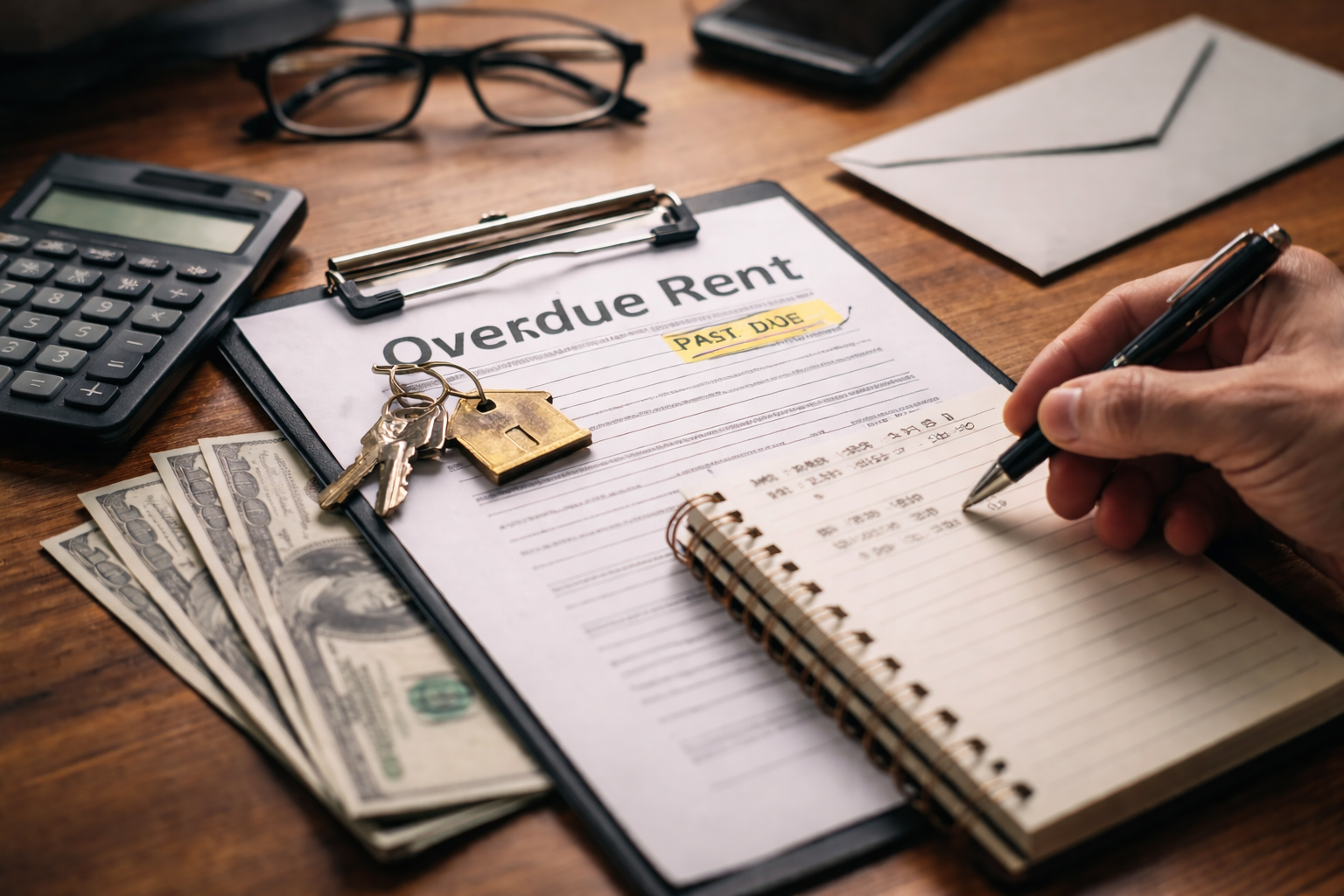
Negotiate unpaid rent balance — I didn’t realize the problem had crossed a line until I opened the portal and saw the “Balance Due” staring back like it had been sitting there for weeks. It wasn’t just one missed payment anymore. It was a total that made me do math I didn’t want to do, and I caught myself thinking, “If I don’t negotiate unpaid rent balance now, this is going to turn into something I can’t undo.”
What made it worse wasn’t the number. It was how communication changed. Replies got slower. The tone got colder. The building office started using words like “final notice” instead of “reminder.” That shift is usually the last quiet window before the timeline becomes legal instead of personal.
Before you do anything else, check whether part of your balance is a billing mismatch. If your portal shows “paid” but management says “unpaid,” fix that first. It can completely change the negotiation.
Self-check: what you must know in 10 minutes
If you want this to work, you need clarity before you negotiate unpaid rent balance. Use this checklist and write answers down. This is the “self-apply” step that makes your next message sound credible.
- Total balance: $______
- Past-due rent only: $______
- Fees (late/NSF/other): $______
- Months included: ______ to ______
- Lease status: active / ending soon / ended
- Notice status: none / pay-or-quit / court filing / unknown
- Realistic payment today: $______
- Realistic weekly/monthly payment: $______
- Proof available: pay stubs / bank screenshots / assistance application / none
Negotiation fails most often because the renter guesses, delays, or offers numbers that collapse the moment the landlord asks for dates.
Validate the balance before negotiating
To negotiate unpaid rent balance from a position of strength, you must confirm the total is correct. Landlord systems are not perfect. Properties change management. Charges get duplicated. Credits get posted late. A “balance” can include things you can dispute, which makes your settlement offer smarter.
- Separate rent from fees: landlords negotiate rent more readily than “contract fees,” but fees can sometimes be reduced if you settle quickly.
- Look for double-charging: a duplicate month can happen around lease renewals or partial payments.
- Check timing charges: move-out related charges sometimes slide into “rent due” categories.
- Ask for a ledger: a simple transaction ledger is normal to request and keeps everything factual.
If you discover errors, you are no longer begging for a favor. You are asking for a correction plus a settlement path.
How landlords think about your balance
Landlords usually evaluate unpaid balances through risk and cost, not feelings:
- Cost of eviction: filing fees, legal fees, staff time, vacancy risk.
- Probability of recovery: can you pay something now, or will this drag out?
- Speed: cash today is often worth more than a “maybe” later.
- Paper trail: clear agreements reduce disputes and future headaches.
This is why negotiate unpaid rent balance can work surprisingly well when you offer certainty. Certainty is what landlords buy with a settlement.
Detailed branching paths (pick your lane)
Lane A: You still live there and want to stay
Your goal: stop escalation, keep housing stable, turn the balance into a plan the landlord can rely on.
Lane B: You still live there but will move soon
Your goal: prevent a rushed notice/court filing before you move, and avoid the balance turning into collections.
Lane C: Your lease ended or you already moved out
Your goal: settle the debt for less, get a “paid/settled” confirmation, and reduce credit/collection risk.
Lane D: You have a notice (pay-or-quit) or court is close
Your goal: move fast, negotiate with proof, and get written terms that pause or dismiss escalation if possible.
Lane E: Part of the balance is disputed
Your goal: separate “undisputed rent” from “disputed charges,” then negotiate from the clean number.
Choose your lane first. The words you use, the offer you make, and the urgency should match it.
Lane A: you want to stay (the strongest leverage)
If you can pay something now and you’re trying to stay housed, landlords often prefer a structured plan over conflict. When you negotiate unpaid rent balance in Lane A, you’re offering stability.
What to propose:
- Immediate good-faith payment: even a smaller amount can reset the relationship.
- Written plan with dates: “$___ on the 1st and $___ on the 15th for 3 months.”
- Auto-pay commitment: if you can do it safely, it signals reliability.
What usually gets accepted:
- Plans that clear the balance within 60–120 days
- A plan plus partial fee reduction
- A plan plus “no further action as long as payments are met”
Do not promise a plan that depends on a miracle paycheck. A broken plan is worse than a smaller plan you can keep.
Lane B: you’re moving soon (avoid the “last-month spiral”)
When move-out is approaching, landlords sometimes tighten up because they fear you’ll disappear. This is exactly when you should negotiate unpaid rent balance with clarity and a timeline.
What to propose:
- A specific move-out date (if applicable) and a settlement plan tied to it
- A partial lump sum now + smaller follow-up payment on a fixed date
- A written confirmation of the final balance after move-out inspection
Your key sentence: “I want to resolve this before move-out so nothing gets sent to collections.”
If the balance includes questionable charges after your departure, that’s a separate lane. Don’t negotiate blindly.
Lane C: lease ended or you already moved out (settlement territory)
This is where settlements happen most often. Once you’re no longer living there, the landlord’s top priority is recovery with minimal effort. If you want to negotiate unpaid rent balance for less, Lane C is the cleanest place to do it.
Typical settlement ranges (realistic, not fantasy):
- Small balances: 70%–90% if paid quickly
- Mid balances: 60%–85% depending on landlord flexibility and timing
- Larger balances: often negotiated through structured settlement (two payments) rather than one
How to phrase it:
- “I can pay $___ by (date). If you accept that as full settlement, please confirm in writing that the account will be reported as settled/paid and not sent to collections.”
Always include: “confirm in writing.” Without that, you may pay and still get chased later.
Lane D: you have a notice (speed is your leverage now)
If you have a pay-or-quit notice or you suspect a filing is coming, you can still negotiate unpaid rent balance, but the window is narrow. The landlord’s posture may be “process-driven” now. Your job is to offer a faster resolution than court.
What helps most:
- Same-day message + phone follow-up
- Proof you can pay at least something immediately
- A short written proposal with dates and amounts
What to ask for:
- “If I pay $___ today and follow the plan, will you pause filing / pause further action?”
- “Please confirm the agreement in writing by email.”
Do not argue about fairness on Day 1 of a notice. First stabilize. Then dispute details if needed.
Lane E: part of the balance is disputed (split the numbers)
This is the advanced move. When you negotiate unpaid rent balance and part is wrong, separate it clearly:
- Undisputed rent: “I agree I owe $___ for rent.”
- Disputed charges: “I dispute $___ because (short reason) and I’m requesting a corrected ledger.”
Then offer a settlement on the undisputed portion first. This signals good faith while protecting you from paying nonsense.
What to say (scripts that actually work)
When you negotiate unpaid rent balance, your opening should sound like a plan, not a confession.
Script 1: payment plan (staying)
“Hi, I’m reaching out to resolve my balance. I can pay $___ today and then $___ on (date) and $___ on (date) each month until it’s cleared. If we agree, can you email the plan in writing and confirm no further action will be taken as long as I meet the dates?”
Script 2: settlement (moved out / ending)
“I want to settle the balance quickly. I can pay $___ by (date) if you accept it as full settlement. Please confirm in writing that the payment satisfies the account and it will not be sent to collections.”
Script 3: disputed items exist
“I want to resolve the rent portion immediately. I agree I owe $___ for rent, but I’m disputing $___ in charges and requesting a ledger. I can pay $___ toward the rent portion now if we confirm the corrected balance and terms in writing.”
Keep it short. Keep it numeric. Keep it date-based.
Hard rules that protect you
- Get it in writing: email is fine, portal messages are fine, but save copies.
- Pay traceably: avoid cash without receipts.
- Do not admit to things you can’t verify: confirm the ledger first.
- Ask how the account will be reported: “settled,” “paid,” “closed,” and “sent to collections” are not the same.
This is general information, not legal advice. Tenant rules vary by state and city, so treat this as a practical playbook and verify local requirements when needed.
For an official consumer resource on debt collection risks and your options, use the CFPB.
Mistakes that quietly ruin your leverage
- Waiting until “next week”: landlords often start process steps without warning.
- Offering a number without a date: it sounds like delay.
- Over-sharing your story: landlords decide on risk; certainty beats emotion.
- Accepting verbal promises: staff changes and memories vanish.
- Sending partial payments without terms: it may not stop escalation unless agreed.
The most expensive mistake is silence. If you can’t pay today, you can still negotiate unpaid rent balance today.
Key Takeaways
- negotiate unpaid rent balance works best before the account leaves management.
- Validate the ledger first, then negotiate the clean number.
- Pick the correct lane: staying, moving, moved out, notice, or disputed charges.
- Use date-based offers and get written confirmation of terms.
- Never rely on verbal agreements; save everything.
FAQ
How many times should I contact them?
If you want to negotiate unpaid rent balance, one message is rarely enough. Send a clear written proposal, follow up within 24–48 hours, and keep a record. Persistence with a stable offer is different from harassment.
Will a settlement stop collections automatically?
Only if the landlord agrees in writing. When you negotiate unpaid rent balance, ask directly whether the account will be sent to collections and request a written “will not send” confirmation if that’s part of the deal.
Should I offer a lump sum or a plan?
Lump sums can produce better discounts. Plans can prevent immediate escalation if you’re staying. Choose the option you can actually perform. A smaller promise kept beats a larger promise broken.
What if I’m scared to call and only want to email?
Email is often better because it creates documentation. If you negotiate unpaid rent balance by phone, follow up immediately with an email summary: amounts, dates, and what was agreed.
Can fees be negotiated too?
Often yes, especially if you resolve the rent portion quickly. Ask for fee reduction tied to immediate payment and written terms.
negotiate unpaid rent balance — Once I stopped treating the portal number like a shameful secret and started treating it like a problem with steps, everything got clearer. I didn’t need a perfect plan. I needed a plan that was real, written down, and sent before the timeline tightened. That’s the moment the balance stopped feeling like a threat and started feeling like something I could finish.
Right now, do this in order: write down your exact numbers, request the ledger if anything looks off, choose your lane, and send a date-based offer today. If you do nothing else, do this: message them within the next 24 hours with a realistic amount and a real date — and ask for written confirmation. That single move is how you negotiate unpaid rent balance before it becomes a long-term financial injury.