
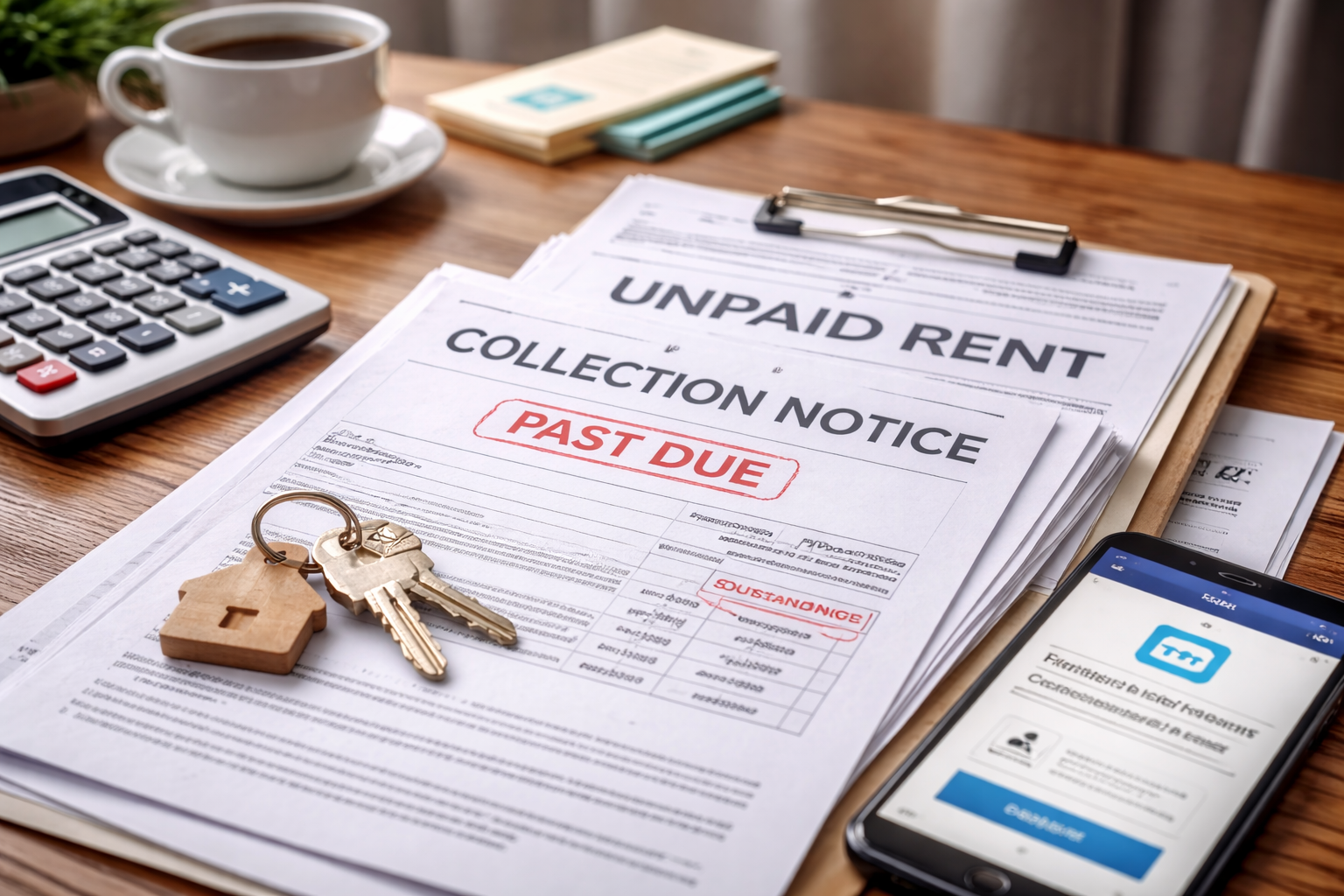
Unpaid rent sent to collections — I didn’t find out from my old landlord. I found out from a notification that felt too calm for how serious it was. It was the kind of alert you get while you’re in the middle of normal life, and that’s what made it worse: a new collection account tied to the place I used to live.
I didn’t spiral. I went quiet. Because once rent becomes a collection account, your problem stops being a “landlord conversation” and starts becoming a “financial record” problem. If you’re reading this because unpaid rent sent to collections, you’re not looking for motivation—you’re looking for a clean plan that prevents further damage.
One reason this happens is that rent disputes often begin with smaller “who pays for what” misunderstandings that never get fully settled. If you’re coming from a repair cost argument, this hub-style guide can help you anchor what’s considered reasonable responsibility before the money snowballs.
The System Behind How Rent Debt Gets Handed Off
When unpaid rent sent to collections shows up, the most disorienting part is timing. Many renters assume there must have been multiple warnings, multiple chances to talk, multiple “final notices.” Sometimes there were. Sometimes the notices went to an old address, landed in a spam folder, or were handled by a property manager you never met. But the bigger reason it feels sudden is that many landlords don’t “negotiate” once an internal deadline passes.
Here’s what commonly happens behind the scenes:
- A balance exists (rent, fees, damages, or a move-out bill).
- The landlord or property manager sends internal reminders and marks the account delinquent.
- The file moves from “leasing office” to “receivables” or an outside vendor.
- At a set day count, they place it with an agency or sell the account.
That handoff moment is the pivot: you’re no longer dealing with a service desk—you’re dealing with a debt process. And debt processes are built for speed, not nuance.
Landlord Perspective: Why They Escalate Fast
Understanding the landlord perspective doesn’t mean agreeing with it. It means predicting their next move. For many property owners, unpaid balances aren’t “personal.” They’re treated like inventory loss. Corporate landlords especially often have a playbook that says: if the balance isn’t resolved by a certain date, it goes out.
They may escalate quickly for reasons like:
- They believe the lease terms are clear and the debt is “routine.”
- They don’t want staff spending hours on disputes.
- They want to discourage future nonpayment behavior.
- They expect the agency to do what their office cannot.
So if you assume “they’ll hear me out,” you can lose time. Your goal is to put the situation into writing and force a paper trail that survives turnover, staff changes, and vendor handoffs.
Tenant Rights: What You Can Still Demand (Even Now)
If unpaid rent sent to collections, many people freeze because they think they missed their chance. But you still have rights, and you still have leverage—especially if the balance includes questionable charges.
Even if you intend to pay, you can still insist on:
- A detailed itemization of the balance (ledger, dates, amounts).
- The name of the creditor (who claims you owe the money).
- Proof the collector has the right account and correct person.
- Written confirmation of any settlement terms.
The trap is handling it verbally. Verbal calls disappear. Written communication creates accountability.
If you want the strongest “official baseline” about consumer debt protections and dispute processes, the Consumer Financial Protection Bureau is a reliable place to start.
Self-Placement Check: Identify Your Exact Risk Level
Answer these with “Yes” or “No” (be honest):
1) Do you plan to apply for a new apartment in the next 6–18 months?
2) Do you expect a car loan, refinance, or mortgage pre-approval soon?
3) Did you move out and leave a forwarding address that you still check?
4) Is the balance made up of fees/damages you never agreed with?
5) Was there a payment that shows “pending” or “posted” on your bank side?
If you answered “Yes” to #1 or #2, your timeline is short and your next steps must be structured.
Choose Your Path in 60 Seconds
Below are the most common paths when unpaid rent sent to collections. Read the headers and pick the box that matches your reality. Don’t “blend” scenarios. Choose one dominant story first—then you can handle the details.
Path A — You Recognize the Balance (Mostly Accurate)
You remember the unpaid month, you know the amount is close, and the issue is mainly timing or hardship.
Goal: Stop escalation, reduce total paid, and protect future screening.
Path B — The Amount Looks Inflated or Random
Fees, damages, cleaning, “administrative charges,” or a lease termination fee appear larger than expected.
Goal: Force a full itemization, challenge questionable charges, and prevent paying for guesses.
Path C — You Paid, But They Say You Didn’t
You have a bank record, receipt, confirmation email, or screenshot, but the landlord claims nonpayment.
Goal: Prove payment, correct accounting, and stop a false collection narrative.
Path D — You Moved Out and This Is a Move-Out Bill
The debt is tied to a final statement after departure: damages, cleaning, keys, “lost rent,” or penalties.
Goal: Challenge the move-out math and avoid accepting responsibility for vague charges.
Path E — You Think It’s the Wrong Person / Wrong Unit / Roommate Issue
A co-tenant moved out, a roommate was responsible, or the agency has mistaken identity or mixed files.
Goal: Dispute accuracy and stop the account from attaching to you.
What To Do in the First 72 Hours (In the Correct Order)
If unpaid rent sent to collections, your first 72 hours should be boring, organized, and written. Not emotional. Not improvisational.
- Capture evidence immediately. Screenshot the alert, record the collector name, account number, amount, and date you saw it.
- Pull your credit reports. You want to see whether this is actually reported, which bureau, and how it’s coded.
- Request validation in writing. Ask for the debt breakdown and proof it belongs to you.
- Build a one-page timeline. Lease start, lease end, move-out date, payments made, notices received, and any disputes.
- Do not negotiate until you see details. You can say “I’m reviewing documentation” and stop there.
The strongest consumer move is “Show me the ledger.” Not “I can pay next Friday.”
If the Balance Is Real: How To Pay Without Making It Worse
For Path A (the balance is mostly accurate), the mistake is paying fast and sloppy. When unpaid rent sent to collections, speed matters—but so do terms. You want a payment that closes the loop, not a payment that keeps the door open.
Use this approach:
- Ask: “What exactly is included in this balance?” (rent vs fees vs damages).
- Ask: “Who is the current creditor?” (landlord still owns it vs agency owns it).
- Ask for written confirmation of any settlement amount and date limit.
- Pay only through a method that creates records (not cash, not vague transfers).
If they refuse to put terms in writing, that is a sign you should slow down, not speed up.
If the Amount Is Inflated: How To Force an Itemization
For Path B and Path D, your leverage is detail. Many inflated balances collapse when asked to show how they were calculated. If unpaid rent sent to collections because of vague move-out charges, the fastest way to get clarity is to demand a line-by-line breakdown.
Ask for:
- A rent ledger showing each month, charge, payment, and remaining balance.
- Move-out statement showing specific damages and dates assessed.
- Copies of any notices they claim were sent.
- Where the lease authorizes each fee.
Your goal is to turn “you owe us” into “here is the math.” Math can be challenged. Vibes cannot.
If You Paid: How To Correct the “Unpaid” Narrative
For Path C, don’t argue. Prove. When unpaid rent sent to collections despite payment, you’re dealing with either an accounting error or a misapplied payment.
Gather:
- Bank transaction record (showing date, amount, merchant/payee).
- Payment portal confirmation or receipt number.
- Any email confirmation from the property manager.
- If payment was by check: image of the cleared check.
Then cross-check the most common failure point: pending/processing mismatches. If your situation resembles “payment pending but they claim unpaid,” resolve that dispute pattern using this internal guide.
Once you prove payment, your next goal is getting the collector to stop pursuing and correcting any reporting tied to the error.
What Not To Do (These Mistakes Are Expensive)
After unpaid rent sent to collections, people often do the exact things that lock them into worse outcomes. Avoid these:
- Admitting the debt is yours before you see details
- Agreeing to payment plans on a phone call with no written terms
- Paying “something” just to stop the calls
- Ignoring letters because you feel overwhelmed
- Trying to out-argue an agency instead of out-documenting them
Collectors respond to structure. When you act like you keep records, they treat your file differently.
How This Impacts Your Next Rental Application
If unpaid rent sent to collections, the hidden damage isn’t only credit scoring. Many landlords and screening systems treat housing-related collections as higher risk than other debts because it’s directly tied to tenancy behavior.
That means your strategy should include “future landlord optics”:
- Being able to show a resolution letter
- Having a clean documentation packet for disputes
- Being able to explain a one-time event with evidence
Future screening is where this issue becomes more than numbers—it becomes access.
Key Takeaways
- unpaid rent sent to collections is a financial escalation stage, not just a landlord conflict.
- Written validation and itemization requests are your fastest leverage tools.
- Never pay without terms; never argue without documents.
- Correcting “unpaid” claims requires proof, not persuasion.
- Your future housing approvals depend on how cleanly you resolve this now.
FAQ
How fast should I respond after unpaid rent sent to collections?
Fast enough to control the paper trail. Waiting doesn’t make the file calmer—it makes it harder.
Should I pay right away to protect my credit?
Confirm accuracy first. Paying without understanding the ledger can mean paying the wrong amount or accepting charges you could challenge.
What if this is from move-out charges I never saw?
Request the full move-out statement and ledger. If the numbers are vague, demand clarity before negotiation.
Can I still settle?
Often yes. Settlement is more likely when the file has clear documentation and the consumer communicates in writing.
Recommended Reading
If your collection balance grew out of move-out billing, these are the two most common triggers tenants miss.
These links help you spot the exact moment a “regular rent issue” becomes a long-term billing problem.
Final Two Things To Do Today
If unpaid rent sent to collections, don’t try to “handle everything” in one phone call. Handle it in two clean moves: first, documentation; second, resolution.
Today, do these two things: (1) request the debt breakdown and validation in writing, and (2) build your one-page timeline with evidence attached. Those two actions turn panic into leverage and prevent you from paying for someone else’s math. Start now—because the longer the file sits untouched, the more your future housing options shrink.