Landlord or tenant responsible for smoke detector — the chirping started in the dark, the kind that doesn’t sound “urgent” until it steals your sleep one beep at a time. I tried the usual fixes: waiting, tapping the unit, even convincing myself it would stop on its own. It didn’t. By the time the sun came up, it wasn’t just annoying — it felt unsafe.
What made it stressful wasn’t the battery. It was the argument waiting behind it. If I touch it and something goes wrong, am I on the hook? If I don’t touch it and there’s a fire, am I still responsible? That’s when the question becomes real: landlord or tenant responsible for smoke detector isn’t a “repair question.” It’s a safety-and-liability question. And the next steps need to be clean, documented, and fast.
If your landlord has ignored repairs before, start here so you don’t repeat the same dead-end conversation.
Fast Self-Placement Checklist
Before you call or replace anything, take 60 seconds and check the boxes that match your situation. This is the quickest way to win a landlord conversation without turning it into a fight.
- The detector is missing or never existed in a bedroom hallway.
- The detector chirps (often low battery) but you’re unsure who should fix it.
- The detector keeps chirping after a new battery.
- The detector is hardwired and not working.
- You received a move-in checklist showing detectors were working at move-in.
- You have a family/roommate situation where someone may have disabled it.
If two or more boxes apply, you’re in the exact situation most people mean when they search landlord or tenant responsible for smoke detector.
The “Habitability” Line Most States Don’t Bend
Across the U.S., smoke detectors are typically treated as life-safety equipment. That matters because life-safety issues are usually tied to minimum housing standards (often called “habitability”).
When something is required for basic safety, landlords usually can’t shift the core responsibility to tenants. The practical rule of thumb is simple: landlords provide compliant devices and keep them functional; tenants use them normally and report problems promptly.
For an official overview of smoke alarm safety standards — including where to install them, how often to replace them, and why they matter for fire prevention — review the U.S. Fire Administration’s guidance.
This is why the phrase landlord or tenant responsible for smoke detector usually has a clearer answer than people expect.
What Landlords Usually Must Handle
In many jurisdictions, landlords are responsible for the “device-level” obligations: providing, installing, and ensuring compliance.
Landlord responsibilities often include:
- Providing smoke detectors at move-in (and in required locations)
- Replacing expired units (many alarms have a 7–10 year life)
- Repairing hardwired detectors and wiring-related issues
- Ensuring detectors meet local code after renovations or unit turnover
- Responding to reported malfunctions within a reasonable timeframe
If a detector is missing, dead, or noncompliant at move-in, that’s rarely a “tenant maintenance” issue.
What Tenants Often Must Handle
Tenants commonly handle “use-level” obligations: basic upkeep and timely reporting, especially with battery-powered units.
Tenant responsibilities often include:
- Replacing standard removable batteries (when accessible)
- Testing alarms periodically (especially after battery changes)
- Not disabling, removing, or covering alarms
- Reporting chirping, faults, or missing alarms promptly in writing
Where people get stuck is the gray zone: “I replaced the battery and it still chirps.” That is exactly where landlord or tenant responsible for smoke detector becomes a dispute.
Pick Your Exact Situation
Find your matching box and follow the steps in order. This structure keeps you calm and keeps the landlord’s options limited.
Case A: The smoke detector is missingThis is typically landlord responsibility because it’s an installation/code issue, not a maintenance preference.
- Do now: Take photos of the missing location(s) (hallway/bedroom area) and any “blank plate” or holes.
- Message: “The unit is missing a smoke detector in the required area. Please install a working detector as soon as possible.”
- Goal: Installation scheduled + written confirmation.
If you’re asking “landlord or tenant responsible for smoke detector” because it’s missing, treat it as urgent.
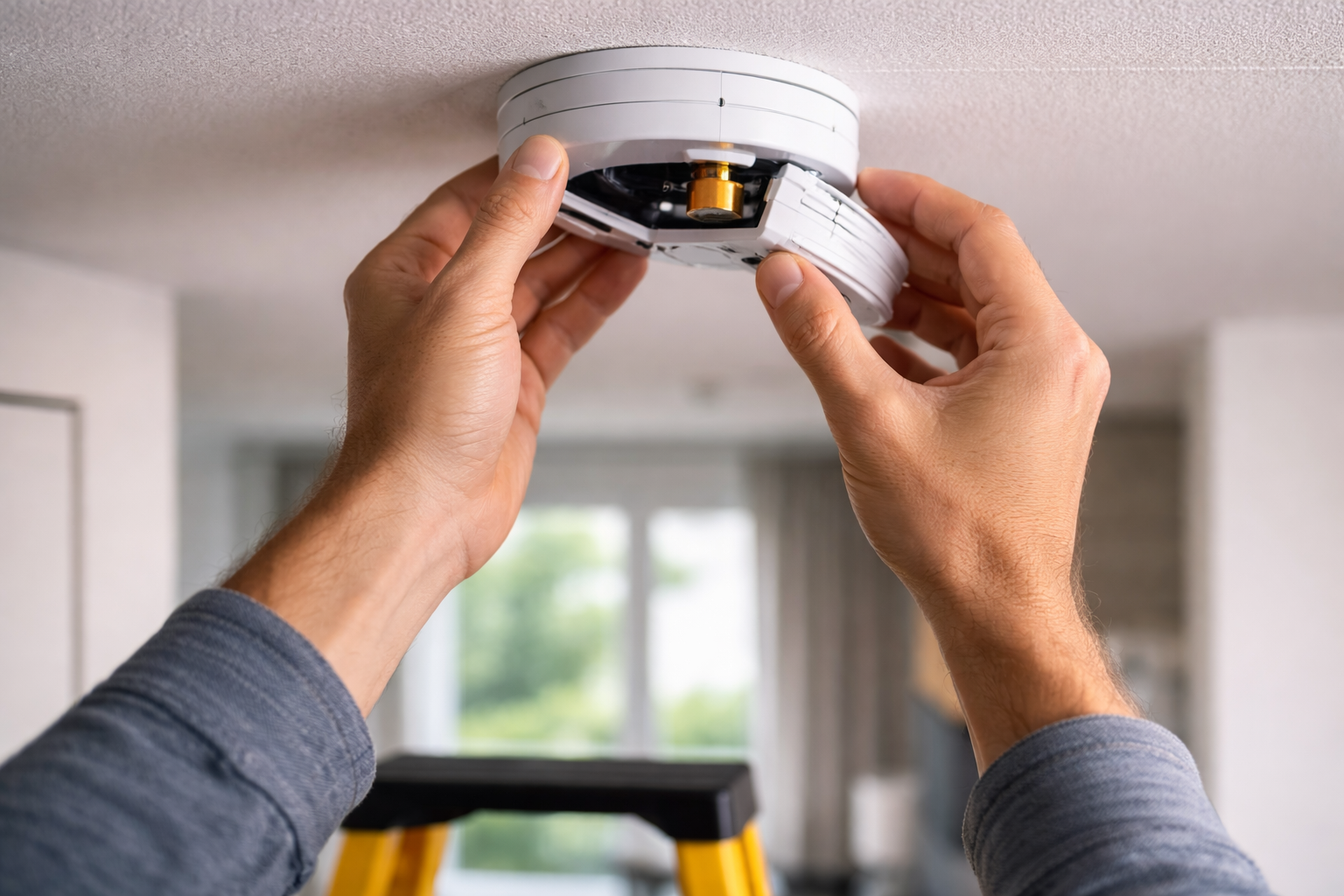
Case B: It chirps (likely low battery) and you can access it safelyMany leases and local rules expect tenants to replace simple removable batteries when the unit is accessible.
- Do now: Replace the battery once, then press “test” for a few seconds.
- Document: Save the receipt or a photo of the battery packaging (optional but helpful).
- If it stops: You’ve likely resolved it. Still, send a short note: “Battery replaced; detector tested and working.”
This is the cleanest outcome for a landlord or tenant responsible for smoke detector question: a quick fix plus documentation.
Case C: It chirps even after a new batteryThis usually signals a failing unit (end-of-life) or a non-battery fault. At this point, it’s reasonable to shift responsibility back to the landlord.
- Do now: Take a short video of the chirp + a photo showing the unit model (if visible).
- Message: “I replaced the battery and tested it. The detector still chirps, which suggests a malfunction or end-of-life. Please replace the unit.”
- Why it works: You’ve proven basic tenant maintenance was attempted.
This is a classic landlord or tenant responsible for smoke detector dispute scenario—your evidence turns it into a simple replacement request.
Case D: The detector is hardwired and not workingHardwired alarms often involve wiring, interconnection, or electrical issues—rarely a tenant duty.
- Do now: Don’t dismantle wiring. Press “test” once. If it fails, document it.
- Message: “The hardwired smoke detector is not functioning after testing. This is a safety repair request. Please schedule service.”
- Best practice: Ask for a time window for access (and confirm entry rules in writing).
If your question is landlord or tenant responsible for smoke detector and it’s hardwired, this is usually landlord territory.
Case E: You (or a roommate) disabled or removed it earlierThis is sensitive because disabling life-safety devices can backfire in a dispute.
- Do now: Reinstall immediately if possible. If you can’t, notify the landlord the same day.
- Message: “We noticed the smoke detector needs to be restored/replaced. Please arrange replacement today/this week.”
- Do not: Argue the reason it was removed. Keep it forward-looking and safety-focused.
When safety devices are involved, the goal is restoration, not blame.
The Clean Documentation Move (Screenshots Beat Arguments)
In a landlord or tenant responsible for smoke detector conflict, the winning move is written proof that you acted responsibly.
- Photo of the device (or missing location)
- Short video of chirping (if applicable)
- Screenshot of your written request (email or tenant portal is ideal)
- Date/time noted (even in your phone notes is fine)
Good documentation makes the landlord’s “it’s not my problem” response feel risky.
Smoke detector issues often overlap with other habitability disputes. If your situation includes air quality or health concerns, this responsibility guide can help you frame the issue correctly:
What Landlords Hear (And How to Speak Their Language)
Landlords respond fastest to “safety + compliance + timeline.” They respond slower to “annoying + unfair + angry.”
Use phrases like:
- “Safety device”
- “Working detector”
- “Move-in condition”
- “Inspection/replacement”
- “Written confirmation”
This isn’t manipulation—it’s precision. It keeps your request in the category landlords know they must take seriously.
Copy/Paste Messages That Work
Choose one and send it today.
Message 1 (chirping after battery):“Hi — I replaced the battery and tested the smoke detector, but it continues chirping. It appears to be malfunctioning/end-of-life. Please arrange replacement as soon as possible since this is a safety device.”
Message 2 (missing detector):“Hi — the unit is missing a smoke detector in the required area near the bedrooms/hallway. Please install a working smoke detector and confirm the installation date.”
Message 3 (hardwired not working):“Hi — the hardwired smoke detector is not functioning when tested. This is a safety repair request. Please schedule service and confirm the appointment window.”
If you’re worried the landlord will push back, remember: landlord or tenant responsible for smoke detector disputes get easier when the message is calm, specific, and written.
Mistakes That Can Hurt You Later
- Ignoring the chirp for weeks and then claiming it’s “urgent”
- Only calling (no written record) and assuming “they’ll remember”
- Disabling the alarm without restoring it quickly
- Replacing the whole unit without documenting why (then requesting reimbursement with no proof)
- Letting the issue drift into a broader fight unrelated to safety
The safest path is always: document → request → follow up → escalate only if needed.
Key Takeaways
- Smoke detectors are life-safety equipment; installation and compliance are usually landlord duties.
- Tenants often handle basic battery replacement when accessible, but failures after that usually shift back to landlord repair/replacement.
- Written safety-focused requests get faster results than emotional arguments.
- Use case branches (missing, chirping, post-battery chirp, hardwired failure) to pick the correct approach.
- The question landlord or tenant responsible for smoke detector is best answered with documentation and a clear repair request.
FAQ
Can a landlord charge me for replacing a smoke detector?
Sometimes only if the tenant clearly damaged or removed it. If the unit is expired or malfunctioning under normal use, landlords often handle replacement.
What if my lease says I’m responsible?
Lease language matters, but it usually can’t override local safety/habitability requirements. Keep your request focused on restoring a working safety device.
Should I replace the entire unit myself?
If it’s a simple battery-powered unit and the landlord is unreachable, you can consider temporary replacement for safety—but document the reason and notify the landlord promptly.
Is chirping always the battery?
No. If you replaced the battery and it continues, the unit may be failing or at end-of-life.
If the landlord refuses to address safety repairs and you’re considering moving, this guide helps you think through next steps without making a costly mistake:
landlord or tenant responsible for smoke detector becomes a serious question the moment you realize this isn’t just about a beep — it’s about whether your home meets basic safety expectations. When a safety device is malfunctioning, “waiting” is the only option that increases risk with no upside.
Do this today, in order: test the alarm, replace the battery once if accessible, and if the problem continues, send a written safety repair request with a photo or short video. Ask for a specific appointment window and written confirmation. If you’re dealing with a landlord or tenant responsible for smoke detector dispute, the fastest resolution comes from calm documentation and immediate action—without turning the issue into a personal war.