
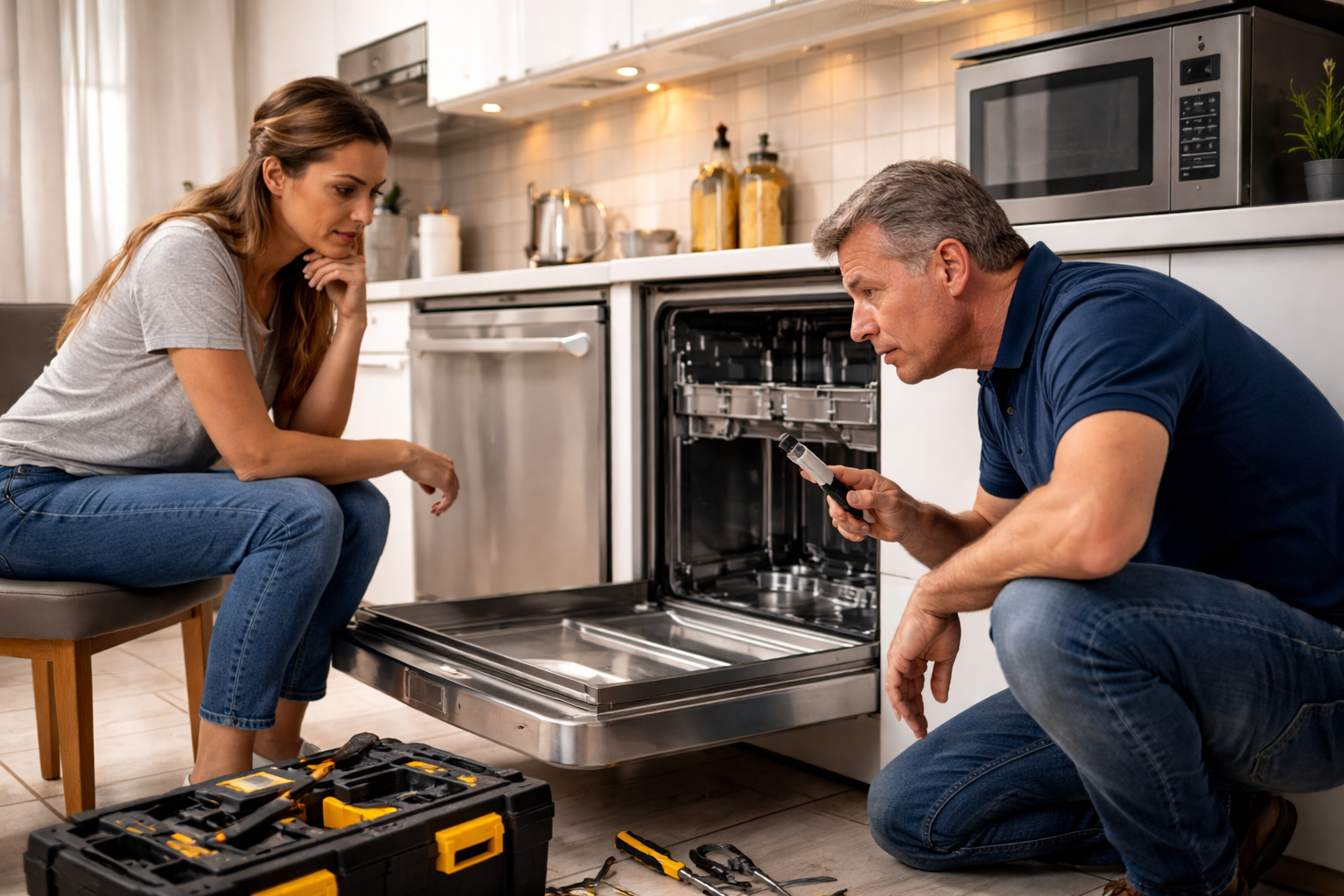
Landlord or tenant pays for broken appliances was not a phrase I expected to type into Google, but I did it with my phone in one hand and a leaking dishwasher in the other. The cycle had ended, the floor was wet, and the landlord’s text back was short: “Depends on what caused it.”
I didn’t get emotional. I got cautious. The moment a landlord says “depends,” you’re no longer discussing a repair — you’re negotiating responsibility. And if you answer the wrong way, you can accidentally accept a bill that was never yours.
If you’re here because landlord or tenant pays for broken appliances is your situation right now, this is built to help you do two things: figure out where responsibility usually lands, and take the right steps today so the conversation doesn’t drift into blame or silent delays.
Big idea: most disputes aren’t decided by who is “right” in theory. They’re decided by what the lease says, what the evidence shows, and whether the issue looks like normal wear or tenant-caused damage.
Before you negotiate, it helps to understand how landlords typically respond when repairs are delayed or minimized. This guide is the closest hub for repair disputes.
Fast self-check: whose appliance is it?
The answer to landlord or tenant pays for broken appliances starts with ownership and inclusion. Ask yourself:
- Was the appliance provided with the rental unit (listed in the listing, move-in checklist, or lease)?
- Is it built-in or permanently installed (stove, dishwasher, HVAC-related equipment)?
- Is it something the tenant brought (microwave, portable washer, mini-fridge)?
If you brought it, you usually own the responsibility. If the unit came with it, the landlord usually owns the baseline maintenance — with one major exception: tenant-caused damage.
The hidden rule most landlords use: wear vs. misuse
When deciding landlord or tenant pays for broken appliances, many landlords (and property managers) do not start with “What’s fair?” They start with “What category is this?”
- Normal wear and tear: parts fail, motors burn out, seals degrade, age catches up.
- Negligent use: ignoring leaks, overloading, blocking vents, not cleaning filters, using wrong detergent.
- Intentional damage: obvious impact damage, tampering, removal of parts.
Most disputes live in the middle bucket. That’s where documentation and timing decide the outcome.
Match your situation (choose the closest branch)
Branch 1: The appliance stopped working with no obvious damage
Example: refrigerator suddenly warm, oven won’t heat, washer won’t drain. This often points to normal failure, meaning the landlord is typically responsible.
Branch 2: There is visible damage or clear misuse
Example: cracked glass cooktop, broken door hinge from forcing it, washer overloaded repeatedly. This can shift costs to the tenant.
Branch 3: The issue caused property damage
Example: dishwasher leak damages floor, fridge water line leaks. Responsibility may split: landlord repairs fixture; tenant may be blamed if they delayed reporting.
Branch 4: The appliance is optional, not required for habitability
Example: garbage disposal in some rentals, built-in ice maker. Landlords sometimes argue it’s “nonessential,” which changes negotiation tactics.
Branch 5: The landlord claims it’s your fault but won’t explain why
This is common. Your job becomes asking for a written reason and inspection evidence before accepting any charges.
Once you know your branch, you can communicate in a way that prevents accidental blame.
Branch 1: sudden failure with no damage
If landlord or tenant pays for broken appliances is coming up because something simply stopped working, treat it like a maintenance request, not a debate.
Do this today:
- Send a short written notice (email or portal ticket).
- Include the date/time you noticed the failure.
- Describe symptoms only (no guessing the cause).
- Request a repair timeline.
Expert move: do not say “It broke because it’s old.” Let the technician say that. Your job is to report the failure promptly.
In many leases, appliances provided by the landlord are part of the rental package. If the appliance dies due to age or normal failure, the baseline expectation is landlord repair or replacement.
Branch 2: visible damage or questionable use
This is the most expensive branch because landlords often treat it like “tenant-caused damage,” and that is where the landlord or tenant pays for broken appliances question becomes a bill.
Before you agree to anything:
- Ask for photos or a written assessment of what they believe caused the damage.
- Ask if the appliance can be inspected by a neutral technician.
- Check whether the landlord is charging “replacement” when a repair is possible.
Important: landlords sometimes jump to replacement because it is easier than troubleshooting. But if the damage is minor, you may be able to limit cost to repair.
If you honestly think you caused the damage, your best move is still to keep the discussion factual and ask for itemized estimates. Even when a tenant is responsible, overcharging happens.
If you’re worried about being billed unfairly or charged more than the real cost, this overcharge dispute guide can help you respond without escalating the conflict.
Branch 3: appliance issue caused water damage or electrical risk
If landlord or tenant pays for broken appliances includes secondary damage—like water leaks, warped floors, or mold risk—your priority changes: you must protect the unit and yourself.
Do this immediately:
- Stop using the appliance.
- Take photos/video of the damage and the source area.
- Notify the landlord in writing the same day.
- Ask whether they want an emergency plumber/tech.
Timing is crucial. If water damage spreads because you waited, landlords may argue you contributed to the loss—even if the appliance itself is their responsibility.
This is where many disputes get messy: landlord responsibility for the appliance, tenant responsibility for “not reporting promptly.” Your proof is your timestamped message and photos.
Branch 4: the “nonessential appliance” argument
Some landlords respond to landlord or tenant pays for broken appliances by claiming the appliance is “a convenience,” not part of habitability. This can happen with:
- Garbage disposals
- Ice makers
- Extra mini-fridges included by prior tenants
- Second ovens or specialty appliances
How you respond matters. If the appliance was advertised, included in the lease, or present at move-in and documented, it’s not “extra.” It’s part of what you rented.
Ask one clean question:
“Was this appliance provided as part of the unit at move-in, and is it listed anywhere in the lease or move-in checklist?”
If yes, the landlord has a stronger obligation to maintain it—or at least address it without shifting automatic costs to you.
Branch 5: landlord says it’s your fault but provides no proof
This is the branch where tenants lose money by being polite and quiet. When landlord or tenant pays for broken appliances turns into “it’s on you,” ask for clarity in writing.
Use a short message like:
“I understand you believe the tenant is responsible. Please confirm in writing what specific evidence supports that conclusion (inspection notes, photos, or technician findings) and whether repair is possible before replacement.”
This does two things: it slows down unfair billing, and it forces a reason that can be evaluated.
What your lease language usually means in practice
Many leases have vague lines like “Tenant responsible for damages” and landlords use that to argue landlord or tenant pays for broken appliances automatically equals “tenant pays.” That’s not how it typically works.
In practice:
- Landlord maintains normal functioning of provided appliances.
- Tenant pays when tenant-caused damage is shown.
- Ambiguous situations often require inspection.
If the lease is silent, the default expectation still leans toward landlord maintenance for provided appliances. But again, behavior and documentation shift outcomes.
Your rights (keep it safe and factual)
Rules vary by state, but a strong baseline principle in U.S. rentals is that housing must meet basic habitability standards and that landlords cannot charge arbitrary repair costs without basis.
For an official starting point on tenant protections, review this government overview:
What not to do (these mistakes flip responsibility onto you)
When people search landlord or tenant pays for broken appliances, they often make these mistakes:
- Trying DIY repairs that create new damage
- Continuing to use a leaking appliance
- Only texting and never emailing
- Admitting fault while you’re still unsure
- Throwing away broken parts before inspection
Quiet rule: the person who documents first usually controls the narrative.
A quick “self-apply” checklist you can copy today
- Was the appliance included at move-in? yes/no
- Is there visible damage? yes/no
- Did I report it within 24 hours? yes/no
- Do I have photos/video? yes/no
- Have I asked for a written reason if blamed? yes/no
- Have I requested repair vs replacement quotes? yes/no
If you work through that list, your landlord or tenant pays for broken appliances discussion becomes much more predictable and less emotional.
Key Takeaways
- landlord or tenant pays for broken appliances usually depends on whether it looks like normal failure or tenant-caused damage
- Provided appliances typically fall under landlord maintenance unless misuse is shown
- Water damage and delayed reporting can complicate responsibility
- Ask for written evidence before accepting charges
- Document early and keep communication factual
FAQ
Does the landlord have to replace a broken appliance?
Not always. Many landlords can repair first, especially if the unit is older. Replacement becomes more likely when repair cost is high or the appliance is unsafe.
Can a landlord deduct appliance repairs from my security deposit?
They can attempt to, but many disputes arise from lack of proof or inflated costs. Request itemized documentation if deductions appear.
What if the appliance was working when I moved in but broke later?
That often supports normal wear unless there is clear evidence of misuse. Prompt reporting helps protect your position.
What if the landlord refuses to fix it at all?
You may need to escalate in writing and document impact. If the issue affects habitability, response expectations are stronger.
If repair delays become a pattern and you need a structured way to push for action without making it personal, use this step-by-step guide.
landlord or tenant pays for broken appliances sounds like a simple question until you’re the one staring at a broken stove and realizing dinner is now a negotiation.
But the situation becomes manageable once you treat it like a process: identify whether it’s normal failure or damage, document immediately, and ask for written reasons before accepting a bill. Most tenants lose money not because they’re wrong, but because they respond loosely.
Do this right now: take photos, report the issue in writing, ask whether repair or replacement is planned, and request written justification if the landlord tries to shift costs onto you.
Fast documentation and calm, structured messaging is the safest way to protect your wallet and keep the relationship intact.